I will be exploring the global warming externality scoped in Virginia, how the government intervened, and its subsequent effectiveness. The Virginia Clean Energy Act, passed in 2020, was a historic energy conservation bill for the state. Among many regulations, it requires Virginia's two main non-renewable energy producers, Dominion Energy and Appalachian Power Company, to be completely renewable by 2045 and 2050 (respectively). The government banned non-renewable energy creation by predominately non-renewable energy producers, creating a quantity restriction for these firms. A benefit of a quantity restriction allows the environmental mitigation to be guaranteed, so Virginia will know exactly how much of the environment they are saving with their quantity restriction. However, a downside of a quantity restriction is the cost to the firm is variable. If it costs a lot of money for Virginia's two main energy producers to abate, this can cause Dominion and Applacian to have their supply curve shift to the left (given they have less energy to work with), causing a price increase of electricity. Simple introduction to Microeconomics shift. This is exactly what happened. Virginia's average cost of electricity per person is supposed to increase five times as much as other states in their same federal spot market in 15 years. This can cause individuals in poorer, rural communities to not have electrictiy: no AC, lights not on, cannot cook food, and so much more. I had the pleasure of taking strides to confirm these results through research with the Weldon Cooper Center. This is a prime example where a government regulation should have been researched more; perhaps a price restriction could have been more effective. The environment benefits in the future marginally while individuals that are close to home will suffer immediately and impactfully.
Wednesday, September 4


Sunday, November 19
Looking at Alternate Voting Methods in the U.S. 2016 Presidential Election
It is interesting to look at who
would have won the 2016 presidential election in a voting type other than the
Electoral College’s decision or popular vote. For instance, if the U.S. had
used instant runoff voting, in which there are a number of rounds and the last
candidate in each round is eliminated and their votes are redistributed to the
other candidates. This keeps happening until on candidate has a majority. In
this study with Dylan Matthews and David Shor, a senior data scientist, Clinton
narrowly wins with 50.7% over Trump. With the Borda count in place, however,
Gary Johnson would win, with Trump in second and Clinton very close behind in
third. Another voting method is “approval voting”, in which voters put a check
mark by however many candidates they would be ok with having as president. The
candidate with the most check marks wins and in this method Clinton was
victorious. Lastly, the “range voting” method, in which the voter ranks the
candidates, the rankings are added up and the candidate with the most is the
victor, gives a Trump victory, with Clinton in a close second.
Additionally, the 2016 election had
a Condorcet winner, which was Hillary Clinton. She won head-to-head against
each of the other candidates, winning against Donald Trump alone with a 50.7%
majority. One of the three desirable properties of voting rules (from class) is
a voting method that chooses the Condorcet winner when one exists. According to
these results, we can see that the U.S. method for voting did not do that in
this case.

https://www.vox.com/policy-and-politics/2016/11/25/13733322/instant-runoff-ranked-voting-2016
The New Tax Bill: A Hit on Higher Education
Based on the Trump administration's plan, house republicans are proposing a tax bill to give many Americans a significant tax break. The bill is supposed to help the middle class but helps the upper class even more through reductions of the estate tax and income tax. The bill also proposes a decrease in corporate tax from 35% to 20%. Groups that are hurt from the bill are graduate students and students with debt. With the constant increasing of college debt, a higher percentage of college student are going into debt. Instead of trying to fix this issue, the house is proposing to eliminate the $2500 tax deduction for student-loan interest. This will cause even more problems for graduating students trying to reach financial independence. Graduate students are taking a major hit from the tax bill. Currently graduate students are taxed based on their stipend which is typically $20k-30k. This has a fairly low tax at around $5k. The new bill wants to include tuition waivers to their taxable income. At more expensive universities, tuition can be upwards of 50k. This places the graduate student to be taxed at a $80k bracket causing the tax to be $15k to 20k. Some graduate students have calculated income tax increases of 300-400%. Since they only have access to their stipend, they lose over half of their stipend to taxes, placing many of these student in financial burden.
From an economics perspective, interests groups would be a way to analyze the situation. Corporations have very strong interest groups due to large amounts of money and the ability to come together as an oligopoly style interest group. On the other hand, graduate students have a high cost of organization due to size of graduate student community and are very limited based on money. Each corporation has a very large portion of the collective benefit and therefore will put forth the money. Graduate students have a very small portion of the collective benefit and have a incentive to free ride if an interest group was made. This is a possible reason why student are being hurt from the new bill, and corporations and the upper class are receiving benefits.
That budget is too high, you need to cut it
Weingast and Moran outlined in their paper the controversial
nature of bureaus or regulatory entities and their relationships with
Congress. The difficulty with giving an
agency so much power and funding is exemplified by the autonomous and budget maximizing
behavior that normally overproduces a quantity resulting in an inefficient
allocation of resources and production of the public good. In addition, it is hard to gauge the true
efficiency for some agencies since their output isn’t always quantifiable.
The Environmental Protection Agency is one of these
agencies, due to the fact their contributions to the environment more often
than not will be observed in the future.
It’s an example of a regulatory entity in the US and also recently received
massive budget cuts during the Trump presidency. Reducing the budget by 2.6 billion dollars,
Trump’s proposal represented an attempt that would be supported by public
choice theorists like Weingast and Moran who hint at the issues with creating a
behemoth sized agency. Further supported
by statistics from the Washington Examiner, the employees essential for thesuccess of the EPA is estimated to be 7%.
Unbelievable. This directly
speaks to the inefficiencies that lie within bureaus and large publicly
provided services as highlighted by public choice studies due to a host of ulterior
motives and special interests.
Congressional Control of Army Secretary
With a new presidency come new bureaucratic faces: a president is responsible for nominating individuals for roughly 500 positions. While most positions are filled with ease, the Army secretary is a position Trump has faced difficulty filling — he announced his third candidate this week. According to the traditional model of agency autonomy, every nominee is rubber-stamped, as congress people are ignorant and act as the bureaucracy commands. Why then, is Trump on his third nomination?
Perhaps the reason is Weingass and moran’s Legislative Choice theory is more realistic. Mark Green, one of the former nominees, withdrew himself from consideration after “criticism over his past comments on gay marriage, transgender rights and Islam.” Many constituents were angered by this nomination, and expressed their unhappiness to their respresentatives. And while representatives mgt be ignorant of the ongoing a of bureaucracies, they strongly care about the happiness of their constituents. So, instead of a rubber-stamp approval as the traditional model predicts, Green withdrew due to the probable outcome of rejection. Rejection of this nominee is probable not because agencies have autonomy, but rather because congress does.
Perhaps the reason is Weingass and moran’s Legislative Choice theory is more realistic. Mark Green, one of the former nominees, withdrew himself from consideration after “criticism over his past comments on gay marriage, transgender rights and Islam.” Many constituents were angered by this nomination, and expressed their unhappiness to their respresentatives. And while representatives mgt be ignorant of the ongoing a of bureaucracies, they strongly care about the happiness of their constituents. So, instead of a rubber-stamp approval as the traditional model predicts, Green withdrew due to the probable outcome of rejection. Rejection of this nominee is probable not because agencies have autonomy, but rather because congress does.
Communes as Tiebout's Local Government Model
Not too far from Charlottesville,
in Louisa County, there exists the Twin Oaks Community,
an “intentional, egalitarian, cooperative society” created in 1967. It is an
income sharing community, where residents work ~40 hours per week in exchange
for food, housing, healthcare, and a small monthly allowance.
Twin Oaks and the surrounding area is a
microcosm of Tiebout’s local government model. Within an hour of
Twin Oaks, there are 7 other “intentional communities” that are similar in that
they offer an alternative to the orthodox capitalist community, but differ in
their revenue expenditure patterns. There is heterogeneity of options for those
who wish to “drop out of capitalism”. This allows people to make the conscious
choice of opting into living in Twin Oaks, specifically because of the
benefits, policies, and lifestyle that the community provides compared to the
other communities. This enforces that the preferences of consumer voters align
with the pre-set revenue expenditure patterns of the locality. The revenue is
based on 100% taxation, and the expenditure of the locality is given back to
the community through provisions of specific necessities and luxuries. Since
residents intentionally choose to live here, the locality has a revenue
expenditure pattern that reflects the preferences of its residents. Because of
this, the community ensures that it is providing the optimum level of public
goods. Tiebout would argue that the Twins Oaks community is an example of how
local governments offer better solutions than federal governments, because they
are able to capture an accurate revelation of preferences from its citizens. A
large number of localities allow greater heterogeneity in revenue expenditure
patterns than a singular federal government could provide, thus providing more
utility to more people as they are able to live where their preferences are
best met.
Is regulation always rational?
Stigler's capture theory of regulation states that regulation is acquired by the industry and is designed and operated primarily for its benefit, but what happens when government regulation doesn't serve industrial interests? The United States Center for Immigration Services is introducing what is quite literally an entry barrier (one of Stigler's four types of regulation) by tightening restrictions for the high-skilled visa program known as H-1B. Based on Stigler's theory, it would be rational for firms to acquire this regulation because it would serve as another source of profit. Tech firms, however, strongly oppose this regulation and argue that they need these visas to fill critical job roles. Similar to the car market example discussed in class, this reduction on imported labor could represent (at least for tech firms) dead weight loss from foregone foreign output that would be efficient to produce.

Additional regulation is being challenged in court that would allow spouses of H-1B workers the right to work. If this goes through, not only could Professor Coppock free ride by not joining a labor union for UPS workers, but Mrs. Coppock could as well, increasing the group size and therefore the organizational costs.
Are you smarter than a senior bureaucrat?
Two of the major pieces of empirical evidence acknowledged by both
Niskanen and Weingast & Moran as generally agreed upon observations are the
“perfunctory nature of confirmation hearings of agency heads” and the “lack of
ostensible congressional attention or knowledge about the ongoing operation and
policy consequences of agency choice”.
But both of these statements saw
some pushback this week. Kathleen
Hartnett White, Trump’s nominee to head the Council on Environmental Quality,
testified on Wednesday during her Senate Confirmation hearing, and many are
calling it a train wreck. When
questioned by senators on the Senate Committee on Environment and Public Works
on issues such as the existence of climate change, human’s role in climate
change, and its effects on the planet (oceans, coral reefs, etc), Hartnett
White struggled to respond. She
repeatedly reminded senators that she was “not a scientist” and deflected
questions with vague responses, even failing to answer whether or not water
expands as it heats up. She made these
senators look like climatologists, while she looked flustered, confused, and
clueless.
So why did these senators spend time
and energy learning about thermal dynamics and even printing out a large
graph—are they irrationally un-ignorant? First, many of these senators come
from states where environmental conservation efforts are valued highly by their
constituents, like Wyoming, Alaska, Vermont, Oregon, and California. Many also receive incentives from
lobbyists. Senator Whitehouse got
especially sassy as he grilled Hartnett White—and this could definitely be
because a significant portion of his campaign funding came from lobbyists for
the Environmental Industry. 45+
conservation organizations also petitioned the committee members to reject
Hartnett White’s nomination, putting added pressure on the committee. With all these incentives to educate
themselves, especially in the midst of such a controversial nomination, their
actions may not be so irrational after all.


such a big graph!!
Saturday, November 18
Public Choice in Black Robes
In this post, I'll talk about the Supreme Court through the lenses of two specific public choice topics we've studied this semester: the median voter theorem and the study of bureaucratic behavior.
MVT: While the Supreme Court does not (or at least claims not to) operate along a single ideological spectrum, there appears to be a consistent spread of liberal to conservative, with a single justice often taking the role of "swing justice." During much of his time on the Court, this has been Justice Kennedy. According to the Median Voter Theorem, we should expect most cases to be decided in accordance to Justice Kennedy's preferences, and therefore see relatively few dissenting opinions from him. We do in fact see this. Justice Kennedy issued a dissenting opinion in 4.3% of the cases in which he participated (92 out of 2131), compared to 9.3% for far-right Justice Thomas (155 out of 1666) and 7.1% for far-left Justice Ginsburg (105 out of 1465).
This graph depicts the ideological trends of the court over time, showing Kennedy as the median justice (swing justice) in recent years.

The Court as a Bureau: The Supreme Court (like the judiciary system at large) is designed such that it is isolated from the incentives often analyzed by public choice economists. Judges need not maximize their vote share the win re-election--they are appointed for life terms. They need not worry about the next year's salary/budget--Congress cannot reduce judicial salaries. Do justices, as the idealist may like to believe, act simply according to their intrinsic conceptions of law, morality, and jurisprudence?
No. Like other political actors, Supreme Court Justices act to maximize their power. However, as they lack any means of decision enforcement, their power lies wholly in the popular trust in and reverence for the judiciary system. As such, many actions which would appear to be consistent with power-maximizing behavior would in fact diminish the power of the court, by diminishing public respect and reverence for the court. Additionally, the court's exercise of power is restrained by Congress, as evidenced by FDR's 1937 court-packing plan, which resulted in the court deferring to Congress' interpretation of the Commerce Clause, after enforcing it's own interpretation vigorously for many years.
Individual Justices maximize power by strategizing their votes so as to be able to write or assign the majority opinion. The court as a whole maximizes its power by exercising restraint when under scrutiny; it unleashes exercises this enlarged power by acting more freely when under less scrutiny. Creating a mathematical model for Supreme Court behavior may be possible, but it is unlikely to be particularly intuitive or empirically verifiable. However, the Court's behavior is not simply a black box of reasoned moral and legal judgements. The Justices' behavior is affected by incentives and thus can be predicted to some degree with adequate study of these incentives.
Donald "Deregulator" Trump
If there is any action that President Donald Trump has taken since his inauguration that George Stigler and Sam Peltzman would be proud of, it would be the drastic reduction in regulations that the administration has engendered. The President made a promise during his 2016 campaign to cut two established regulations for every new one implemented, and by most policy analysts' evaluations he has largely kept that promise (so far). The Trump Administration has added a net of a zero new regulations to the Federal Register since its ascendancy in the beginning of 2017. The regulations that have been particularly targeted for cuts are those that are duplicative, grossly outdated, and excessively costly to smaller firms in various industries. Therefore, Stigler and Peltzman would approve of Trump's deregulatory agenda principally for its effect of helping to make markets more competitive by stripping down regulatory entry barriers in various industries dominated by large firms. As Stigler theorized, "every industry or occupation that has enough political power to utilize the state will seek to control entry." Moreover, not only is there an estimated $2 trillion in annual regulatory costs imposed upon the US economy by all levels of government, the deadweight loses and productivity declines that are hard to calculate make the regulatory burden much more onerous than it superficially appears from a simple accounting perspective.

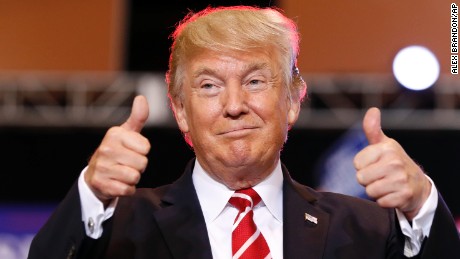
This is not to say that there is a need for some regulations to assist in mitigating market failures caused by externalities, but with just under 100,000 pages in the Federal Register in 2016 alone, obviously many of these rules and restrictions are not achieving such magnanimous public purposes. Allocative efficiency would be much better promoted in more oligopolistic industries, such as the petroleum, pharmaceuticals, and beer industries, if established firms in these industries were not insulated from needing to innovate and cut costs as much as they are now as a result of regulations shielding them from the entrance of new competitors. Therefore, despite Trump being economically illiterate on many fronts, his deregulatory agenda would be given a thumbs up by the great economists Stigler and Peltzman.
Friday, November 17
Most hated agency in America goes to:
I think it's pretty fair to say that everyone hates some government agency or another. Evan doesn't seem to be a fan of TSA and Thanos didn't have a great time at the DMV either. According to an article published by the Washington Examiner, there are a few federal agencies that Americans hate the most. Topping the list is the Department of Veteran Affairs, followed by the IRS and Department of Education. The article also highlighted the most liked government agencies, which included the Postal Service, National Park Service, and NASA. One may think that our approval of all agencies should be fairy high considering there is a principal agent relationship between voters and representatives, and representatives and bureaus. We elect representatives who then oversee the bureaus who carry out policy, right? According to Niskanen, this high disapproval is a prime example of "agency autonomy" or "bureaucratic autonomy."

There are 3 main reasons for Agency Autonomy: they are difficult to measure, a monopoly supplier, and limited contract options. Additionally, there is some empirical evidence including lack of oversight hearings, infrequency of policy resolution, and lack of congressional knowledge. Weingast and Moran would come back at this to say hey, this is also evidence of congressional dominance. If Weingast and Moran are correct and this isn't agency autonomy, there is still a problem here. Even if agencies are in fact doing what congress wants, that means congress isn't doing what the Americans want. There is still a principal agent problem here.

There are 3 main reasons for Agency Autonomy: they are difficult to measure, a monopoly supplier, and limited contract options. Additionally, there is some empirical evidence including lack of oversight hearings, infrequency of policy resolution, and lack of congressional knowledge. Weingast and Moran would come back at this to say hey, this is also evidence of congressional dominance. If Weingast and Moran are correct and this isn't agency autonomy, there is still a problem here. Even if agencies are in fact doing what congress wants, that means congress isn't doing what the Americans want. There is still a principal agent problem here.
Tuesday, November 14
Everyone's favorite bureaucracy in action
The Transportation Security Administration has come under a lot of scrutiny lately for its high costs and poor efficiency -- but is this a surprise? According to its website, the goal of the TSA is to "Protect the nation's transportation systems to ensure freedom of movement for people and commerce." Its core values are "Integrity. Innovation. Team spirit." Funny stuff. In a recent test of its efficiency, its success rate was determined to be roughly 20%, failing to detect forbidden objects such as weapons and explosive materials 80% of the time. Upon performing an economic analysis on this bureaucracy, it is not surprising to find that it is severely underperforming; its output is extremely difficult to measure, and it is a monopoly supplier.
The TSA's goal stated above is extremely vague, and its output is hardly even defined and even more difficult to measure; if its output is preventing would-be terrorist attacks, there is no way to measure that. How is one to know whether the knife or bottle of sunscreen that was confiscated was going to ultimately be used in a terrorist attack? Further, it faces no competition. In other security industries, such as home security, there are many companies competing to drive quality up and the price down. Yet the TSA is insulated from bad flyer experiences and has no incentive to lower costs or increase efficiency because it wants as much federal money as possible and has no reason to lower costs, with no competition. One topic worth looking into is introducing competition into the airline security industry. At their discretion, different airlines would bring in different security companies that do, in fact, have incentives to lower costs. This would both lower costs for consumers and free up the wasted resources currently used in the TSA for more productive uses in the economy.


The TSA's goal stated above is extremely vague, and its output is hardly even defined and even more difficult to measure; if its output is preventing would-be terrorist attacks, there is no way to measure that. How is one to know whether the knife or bottle of sunscreen that was confiscated was going to ultimately be used in a terrorist attack? Further, it faces no competition. In other security industries, such as home security, there are many companies competing to drive quality up and the price down. Yet the TSA is insulated from bad flyer experiences and has no incentive to lower costs or increase efficiency because it wants as much federal money as possible and has no reason to lower costs, with no competition. One topic worth looking into is introducing competition into the airline security industry. At their discretion, different airlines would bring in different security companies that do, in fact, have incentives to lower costs. This would both lower costs for consumers and free up the wasted resources currently used in the TSA for more productive uses in the economy.


Sunday, November 12
Rent seeking and opioid crisis
According to an article on US News (https://www.usnews.com/opinion/policy-dose/articles/2016-10-17/why-cancer-groups-and-drugmakers-want-to-block-opioid-regulation .... the hyper link button on Blogger isn't working on my browser!! 😭), Drugmakers
and cancer groups are “strange bedfellows in the effort to stop
opioid regulation”—meaning they both want to block drug
regulation. A big issue in the opioid crisis is associated with the excessive dealing
of opioid prescriptions, where very little doctors specialize in writing the
prescriptions. In 2015, 227 million opioid prescriptions were written. There
are also illegal opioid producers supplying the addicted population, on top of
the legal prescriptions given out. The pharmaceutical industry has spent $880
million on nationwide lobbying since 2006 in an effort to prevent state
regulation that would set limits on prescription-writing activities. Millions
of dollars and 1,350 lobbyists come from the pharmaceutical producers whose profits
depend on the prescriptions. Interestingly, lobbyists also include the American
Cancer Society and the Cancer Action Network. The cancer groups are working for
their members, hoping to maintain unrestricted access to painkillers, but this
is still rent seeking activity. This large amount of effort and dollars spent
rent seeking to maintain their revenue (for the pharmaceutical companies) from
opioid prescriptions is an example of a poor allocation of resources, and especially
for the American Cancer Society where the dollars could have gone to funding
research instead of funding activities with negative social cost.
Subscribe to:
Posts (Atom)