I found the Downs article to be fascinating, as I think its application of a spectrum that represents the median voter’s interests can be applied to all sorts of scenarios. Downs creates a model that allows us to see a functioning dynamic between a politician seeking office and the median voter in their district. This relationship between how a politician may orient their electoral position on policy in an election along issue spectrums, depending on where voters congregate on issues, will determine where a politician will position themselves to better appeal to the median voter. This summer, I found that many politicians did this, where popular issues would arise and politicians would take advantage of a policy issues’ popularity in order to win voters in their district. More specifically, politicians narrowly focus on issues that seem irrelevant, but it actually appeals to a specific set of voters, where they congregate on a policy issue. In this press release statement, Senator Cruz supports Former President Trump proposal for 'no taxes on tips', which was introduced at a rally in Nevada and was very popular. In this scenario, Senator Cruz is appealing to the median voter by aligning himself with a popular policy issue, where the average median employee, who relies on tips, would stand. This specific set of voters is the “bump” along the spectrum. In drafting and passing policy that is extremely specified to where a certain set of voter have one preference, politicians can gain support easily. Moreover, since it is typically a group of politicians seeking elections that all might need to pass oddly specific policy that appeals to a voter spectrum to gain votes, logrolling might occur. Under the assumption of simple majority, a group of politicians create policy that appeals to their chosen spectrum of voters, this will pass in order for the politicians to be reelected.
Sunday, October 6


I voted
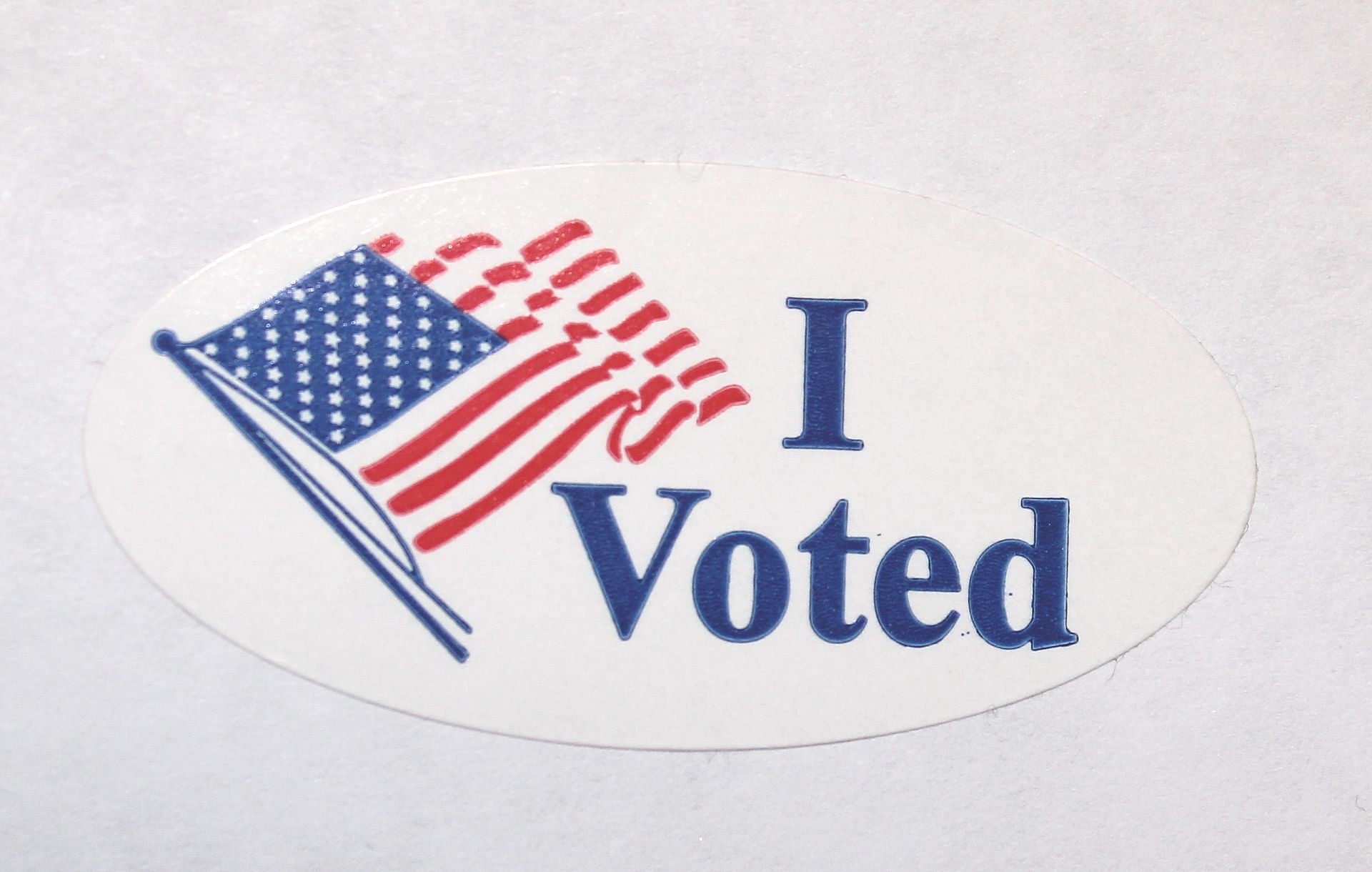 I voted today after lunch—absentee, if that wasn't clear. There's no particular reason I couldn't have voted on Election Day proper, but this was just more convenient. Indeed, I timed it, and it took 8 minutes, 34 seconds for me to vote (including walking to the nearest mailbox). That's several times faster than it would have taken me to vote in person. When I did that for this year's primary, it took about 45 minutes round-trip.
Still, I was willing to vote in both instances. This five-fold reduction in the time cost of voting wasn't decisive. Nor would we expect it to be, given how low the chances were of my vote altering the elections' outcomes in either case. I chalk it up to a taste for voting, because I always had a good time accompanying my parents to the polls when I was a wee lad. I carry that habit/taste with me into adulthood, and I value it plenty higher than even several hours of my time. It seems that most other voters do so based on a pretty strong taste, expression, or civic duty as well; after all, 2020's massive expansion of mail-in voting seems not to have had much of a causal impact on voter turnout. Those who already planned to vote voted; those who didn't, didn't.
Would Harold Hotelling go to Dunkin' or Starbucks?
Dunkin' Donuts and Starbucks have supplied America with caffeine for over half a century. Both offer a variety of specialty coffee drinks on their respective menus. I am indifferent about the two. Starbucks provides slightly better quality at a more premium price; however, with this difference, the two still provide remarkably similar products. In a study done in 2021, looking at the location of Dunkin stores, only one of the six explanatory variables studied was found to explain these locations. The number of Starbucks in each zipcode was the only statistically significant factor out of the population, number of households, income per capita, household median income, and family median income that could help predict a Dunkin' location. Harold Hotelling's model, which is related to spatial competition, could explain this observation better. In his model, with two competitors set in their respective locations, it is optimal for each store to move and operate in the exact same area. Under the assumption that people are indifferent between their products and buy from the closest location (for the purpose of the model), these moves happen because the two will play relocation cat and mouse until they end up in the exact location. This would create an equilibrium where people are indifferent about traveling to either Dunkin' or Starbucks, and it is now Pareto efficient because nobody can move without making one person worse off. When I ponder this study, what surfaced in my head are the Dunkin' and Starbucks stores that sit directly next to each other as you pull into the gates of my hometown high school, and Harold Hotelling helped me understand why. His model can be applied vastly to two-party political systems, fast-food chains, or even the bars on the Corner at UVA.
FOFR (Fear of Future Regret)
ECON 4300 - Public Choice
ARCH 1010 - Lessons of the Lawn
ECON 3720 - Econometrics
COMM 3010 - Intermediate Accounting
RELC 1220 - Early Christianity and The New Testament
This is my current schedule for the 2024 Fall semester, and as my accounting professor pointed out, it’s quite diverse. This lineup is a direct result of my aversion to future regret that drives many decisions in my life. Mueller would describe me as a minimax-regret strategist as the fear of future regret incentivizes my behavior as a rational agent.
I became conscious of this strategy at the end of first year when I finally entertained the idea of pursuing a degree in Architecture. I’ve always admired architecture and the passion that is palpable within the field, but never considered it for myself as I can barely draw a straight line. However, I recognized my opportunity to discover this field was fleeting and dreaded the idea of being discontent at a future job where I would dwell on what could have been if I’d only taken action. UVA is conducive to this strategy to an extent: each degree requires a diversity of subjects but there’s only a certain amount of credits taken outside the College that one can use towards their 120 credit-hour requirement. So while the classes in the A-School (and the many I took in the Comm School) set me back on Arts & Science credits needed for graduation, I weighed the E[MB] with the MC and found that the possibility of finding a passion, appeasing any future regret I may have, and broadening my education here at UVA would have a greater payoff than the costs of taking these classes, which include imposter syndrome, the extra work and effort to learn a brand new subject, and the opportunity cost of taking Econ classes. This doesn’t mean that the choice was easy - high opportunity costs including the possibility of graduating early or taking fewer credits each semester linger over my head, but I was and am ultimately pushed by future uncertainty that could contain regret of my inaction.
With that being said, I find the case of the minimax-regret strategist to be very underestimated as it’s intuitive for a rational individual to consider the outcome of their choices, which is a forward-looking approach that can naturally lead to considerations of future regret. Therefore, it’s rational and common for an individual to be motivated by the possibility of regret, and this incentive for behavior allows us to understand consumer preferences, as Mueller depicted in his attempt to rationalize the act of voting.
Subscribe to:
Posts (Atom)