Tuesday, October 17

Occupational licensing and rents

Occupational licensing -- government regulations requiring an individual to obtain a license, and often undergo training and pay a fee, before taking up an occupation -- have existed in the US for decades. This affects occupations including but not limited to barbers, cosmetologists, doctors, lawyers, and florists. Ilona Holland provides a great example of its impact: After deciding that she wanted to start a massage therapy business in Nebraska, she discovered she'd need to accumulate 1,000 hours of training to meet the state's licensing requirements. Here, occupational licensing's impacts are apparent: it creates an artificial entry barrier which limits the field of workers in an industry, thus reducing competition and potentially increasing salaries of workers already in the industry.

This directly ties in to the topic of rents: the raised barrier of entry created by occupational licensing creates rents for the protected workers. With these rents comes a great incentive to rent-seek. If workers in an industry can come together and lobby the government to pass a law requiring all future workers in that industry to pay a fee and get a license first, that will limit the number of people who enter and most likely raise the wages of those workers already in the industry. Perhaps this explains why so many industries require a license (see graph) or somehow increase barriers to entry in that industry. It's not that training is bad; the problem is that it is government-mandated, which nearly guarantees an artificially smaller pool of workers in a given industry, which creates the rents.
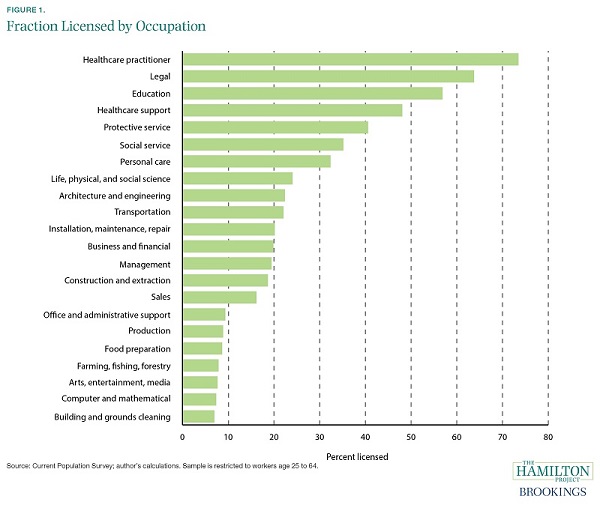
1_fraction_licensed_by_occupation

No comments: