If you look at the time stamp on this post, you will see
that I wrote it out during the conclusion to the Presidential election. My
thought process was what better way to take my mind of an incredibly contentious and heated election season than talking about rent seeking! Or specifically,
can we view presidential runs as rent seeking? CBS
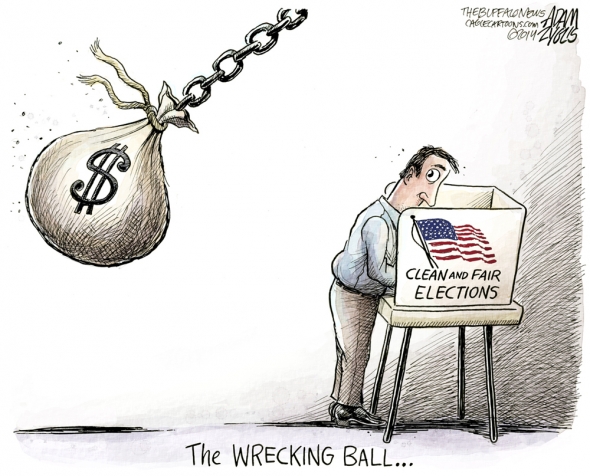
estimated that the mudslinging contest between Trump and Clinton cost roughly 2.65 BILLION
dollars. That amount is actually a little smaller than the all-time high of
2.76 BILLLION
in the 2012 race between Romney and Obama. So was all of this campaign money
really just a form of rent dissipation, or is it something entirely different?
In a simple sense, perhaps this can be viewed as rent
seeking behavior. We can see Donald Trump and Hillary Clinton both competing for
a government contract. That contract is the title of President, and it does come with a small salary (roughly
400,000 dollars a year or 109,000
dollars less than President Sullivan’s salary). But the position seems to be more then just the money. Since only one of the candidates can win, the winner would get to
act in a sort of monopolistic role exercising all the powers that the President is allotted.
They use their rent seeking resources to essentially lobby the American people into choosing
them. The market they operate within could potentially be a simple demand and supply
market with the demand is the policies desired by the population and the
supply is the policies set by whomever the President is (with their monopolistic
power giving them the ability to better set their own agenda then if in a
different political position).
However, this potential model can be complicated by the fact
that we really only associate rent seeking with private firms, and rent isn’t usually
the ability to set a policy window, but rather the ability to generate economic
profit. Additionally, the rent seeking behavior firms exhibit tend to be geared
towards using their own resources instead of the resources a candidate generally borrows/takes from others (as one does in a campaign). Perhaps this would require
us to then integrate some of the ideas toward collective action that we see in Olson’s
theory as to determine when someone would contribute.
As such, while political campaigns are definitely their own
animal with their own nuances, there does appear to be some similarities to the
rent seeking behavior we see in private firms and collective action. Perhaps
there is the potential to expand these models in a way that will bring
presidential campaigns into the fold as their own form of rent seeking.


No comments:
Post a Comment