According to a new study, 50% of 18-34-year-olds said they would forfeit their right to vote in the next two presidential elections in return for never having to pay another student loan payment again. I found it staggering that so many millennials place that much value on their vote. The probability that an individual's vote will force or break a tie in a presidential election is so incredibly tiny that his or her vote is essentially meaningless. What could possibly explain such behavior?
We know that E[MB]=P*|V1-V2| +D, and that this has to be greater than the marginal costs in order for the voter to decide to vote. Without the D in that equation, the expected marginal benefit of voting is virtually 0 since P is infinitesimal. Given that 66% of graduates from public colleges had taken out loans in 2012, with loan debts averaging $25,550, the amount for D must be astronomical in order for millennials to value their expected marginal benefits higher than the marginal costs (and subsequently choose to vote). They must place thousands of dollars of value on responding to social pressure to vote, deriving utility from the act of voting, fulfilling a moral obligation to vote, or the act of expressive voting. Typically, the only marginal costs of voting include time wasted getting to the polls, standing in line, forgone paychecks, etc. But here, the marginal costs include all that, plus thousands of dollars of debt! I would love a follow-up study to determine which of the above reasons is most commonly cited as the reason for this behavior.
Thursday, September 21


"Un voto, dos votos, Español el que no vote"
Someone told me this summer that the only similarity among
the different provinces in Spain is that they all want to be independent. It
was not until 2011 that Eta, a violent separatist group in the Basque country,
decided to abandon the armed activity that had begun in the 1960’s. Today, about
16-25% of Basques still favor independence but the independence movement that
is currently grabbing headlines worldwide is Catalonia. On October 1st,
Catalans will head over to the polls and vote on the referendum that will
determine whether to remain part of Spain or not.
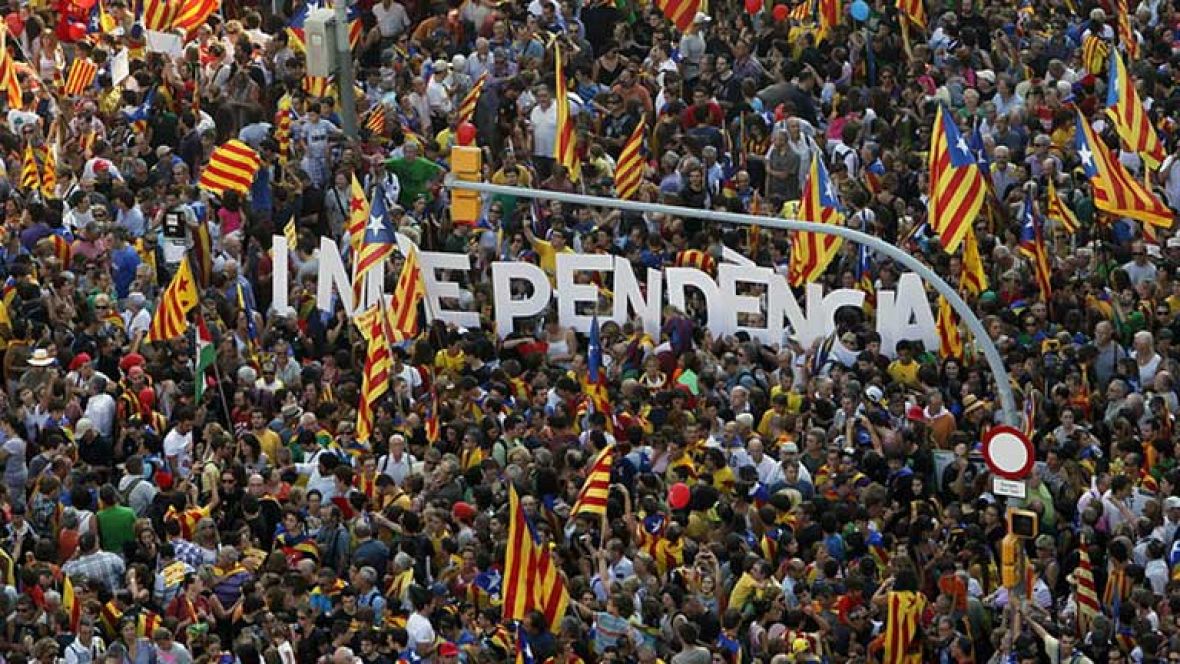
In the past few days, Catalonian officials have received pressure
from the Spanish PM and other high-ranking officials delegitimizing the
election. This morning, the Spanish government has attempted to suppress voter
turnout by increasing the marginal cost of voting through imposing fees on
those who take part of the referendum. On the other side, massive rallies have
taken over the streets with protesters chanting, “One vote, two votes, Spanish hewho doesn’t vote”, encouraging people to show up at the polls in ten days. According
to the newspaper El Pais, only 31% of Catalonians support independence, making
the likelihood of independence very unlikely; however, it would not be the
first upset victory for independence. What is certain is that as irrational as
voting may seem, voter turnout will be a critical determinant on the final
outcome.
Wednesday, September 20
Voting turnouts in Greece
The collapse of the financial and
stock markets in the US back in 2008 had significant effects on other nations'
economies all around the world. One of the countries that still suffers these
devastating consequences is Greece. The country's problems of unemployment,
inflation and inability to stabilize dept have been discussed thoroughly during
the last 8 years. One would except that living during really difficult times
would act as a motif for people to take action and turn into
"citizens" who exercise the rights provided by democracy. Yet, during
the last couple of years, specifically in the period from
1985 to 2015, the voting turnout has been decreasing
significantly with no signs of increasing. On the
September 2015 elections, voter turnout reached all-time
low with various sources estimating it close to 56% .
What could be a sufficient explanation to that dramatic decrease ? From
as early as the 70s to 2014, Greece has had a two-party system. Hence, the
people's benefit from the difference in the utilities coming from the victory
of either party |V1-V2| has been decreased ,since the people have become almost
indifferent to either of the two parties, reinforced by the fixed (extremely
low) chance of affecting the result. The minimax-regret strategy might also be
able to give a sufficient explanation if we consider the opportunity cost in
the case of the unfavorable party winning. Since the two parties have been
favoring their own supporters during their time as the government, the overall cost
Ct incurred by voting in the state of world where the outcome is
independent of the individual's vote (SI) includes both the cost of
the going-to-vote process plus the cost of "unfavorable" policies
brought by the "unfavorable" new government. In other words, the cost
of voting Ct for a Greek person is much higher than other Ct
in different countries. Therefore, Ct can be quite large and force the maximization
of regret to occur after following the "vote" strategy leading to a
minimax-regret strategy to abstain. Greece will see change (towards the better
or worse) only when a political leader will manage to reverse this effect and
convince the people of his honesty and passion for change.
Sunday, September 17
Government provision of public goods as indirect wealth redistribution
The beauty of voluntary private transactions is that each individual may choose how much they wish to purchase of each good, abstaining from those they do not value and indulging in those they do. Public goods thus pose a problem. Government intervention is often required in order to achieve the allocatively efficient quantity and this government intervention frequently fails to take into account the relative preferences of individual members of society, instead distributing the cost of the good either uniformly or in accordance with some trait other than demand for the good (e.g., property value, income). Allocative efficiency is a question entirely separate from distributive justice. The solution chosen to achieve Q(ae) requires a judgement of distributive justice, irrelevant to the efficient allocation of resources, but deeply relevant to the individuals affected by the resulting transfer of wealth.
Funding through a proportional (i.e., neither regressive nor progressive) income tax means that wealthier group members will pay for a greater portion of the public good than will their less wealthy counterparts. Similarly for proportional property taxes. These taxes, among the most common ways to fund public goods, involve a certain degree of inherent redistribution. Whether this is good or bad depends entirely on the very controversial proposition of whether redistributive taxation is good or bad. For the libertarian who views all redistributive tax as theft, this may lead to a condemnation of even taxation not specifically intended to redistribute wealth, due to its redistributive effect. For one passionate about the justice of redistribution, this may mean that should pursue this redistribution through the provision of public goods, rather than directly, as taxation for the provision of public goods will be less strongly opposed than taxes aimed explicitly and solely at redistribution. Most importantly, when making decisions about public goods, one must remember that provision of public goods, while not redistributive by name, cannot be made entirely non-redistributive. Thus, ideological questions of desert and entitlement must be answered, in addition to the positive question of optimal allocation.
Funding through a proportional (i.e., neither regressive nor progressive) income tax means that wealthier group members will pay for a greater portion of the public good than will their less wealthy counterparts. Similarly for proportional property taxes. These taxes, among the most common ways to fund public goods, involve a certain degree of inherent redistribution. Whether this is good or bad depends entirely on the very controversial proposition of whether redistributive taxation is good or bad. For the libertarian who views all redistributive tax as theft, this may lead to a condemnation of even taxation not specifically intended to redistribute wealth, due to its redistributive effect. For one passionate about the justice of redistribution, this may mean that should pursue this redistribution through the provision of public goods, rather than directly, as taxation for the provision of public goods will be less strongly opposed than taxes aimed explicitly and solely at redistribution. Most importantly, when making decisions about public goods, one must remember that provision of public goods, while not redistributive by name, cannot be made entirely non-redistributive. Thus, ideological questions of desert and entitlement must be answered, in addition to the positive question of optimal allocation.
"Young Invincibles"
The private health insurance exchange is an exchange run by a private sector company that focuses on cost reduction for the health care system, and offers a series of standardized health care plans that lower the cost of acquiring health care insurance. However, the ACA exchange rates are driving up higher and next year experts predict that they will rise by double digits. This is a result of ADVERSE SELECTION. The Affordable Care Act, passed in 2010, made medical underwriting illegal — essentially allowing anyone (even those with pre-existing medical conditions) to buy insurance coverage on the exchanges. As a result, one side of the market has more uncertainty than the other—in this case, the insurers. In the insurance business, it is important to make sure that sick people don’t take over the market and drive up premiums and drive off healthy people from joining. However, due to the ACA, there is an imbalance of information and insurers are not able to combat these issues by using an individual’s health background when deciding whether to offer coverage and how much to charge them.
Those with the most need for insurance chose plans with higher monthly premiums to use more services, while the healthier people bought plans with lower premiums. The mix of the two groups is essential to moderating premiums, and as we learned the bigger the pool is, the more risk is diversified. However, many healthy customers are avoiding the subsidized markets, being coined as “young invincibles.” The ACA set limits on what insurers could charge older people purchasing policies because the price would be pushed too high due to the biased pool, and adverse selection is leading to market failure; UnitedHealth reported losing $1 billion on its ACA plans and many other insurers are struggling to manage their high-cost exchange population. Insurers and policymakers are now deciding what needs be done to reach a demographic where there is a proper mix of the market pool, leading to stable premiums.
Those with the most need for insurance chose plans with higher monthly premiums to use more services, while the healthier people bought plans with lower premiums. The mix of the two groups is essential to moderating premiums, and as we learned the bigger the pool is, the more risk is diversified. However, many healthy customers are avoiding the subsidized markets, being coined as “young invincibles.” The ACA set limits on what insurers could charge older people purchasing policies because the price would be pushed too high due to the biased pool, and adverse selection is leading to market failure; UnitedHealth reported losing $1 billion on its ACA plans and many other insurers are struggling to manage their high-cost exchange population. Insurers and policymakers are now deciding what needs be done to reach a demographic where there is a proper mix of the market pool, leading to stable premiums.
Bewildering Bipartisanship
Gridlock between Republicans and Democrats has become the new norm. Regardless of the issue, voting along party lines drives Washington politics. For Congressmen and Senators, keeping in line with their respective parties often works to maintain constituent support and further fortifies party support in the event they later submit a bill for consideration. Voting with one's party, rather than attempting to cross party lines, thus represents a dominant strategy (i.e. a best strategy / optimal payoff no matter what the opposing party decides to do).


U.S. voters, however, have become tired of the incessant bickering and resulting inability of our nation's representatives to reach any sort of agreement on key issues. President Trump, although initially staunch in his positions, has begun to register aforementioned sentiments. To address such Pareto inefficient outcomes, President Trump recently worked alongside Nancy Polosi and Chuck Schumer, Democratic party leaders, to secure a bipartisan budget deal and to discuss a replacement for DACA - a move that shocked both sides of the aisle. Rather than maintaining the status quo, the Republican and Democratic party leaders found that consensus achievements garnered broader constitute support than simply remaining entrenched in party positions. Although it is unknown whether both sides will continue to amicably engage, positive feedback (hopefully) encourages bipartisanship and, ultimately, Pareto efficient outcomes, going forward.
*: Matrix values, representative of constituent sentiment, were selected for illustrative purposes only
Saturday, September 16
Prisoner's (or evacuees') Dilemmas
In Houston, prior to Hurricane Harvey coming, the mayor told residents to stay put and not try to evacuate. The primary reason for this was to avoid a case where highways got stopped up from traffic and residents were stuck in their cars, rather than their houses, when the hurricane came -- a far more dangerous situation.
However, this plan was conducive to a prisoner's dilemma: if everyone in Houston tried evacuating, the highways would get clogged up and everyone would lose. But there was a strong incentive for individuals to take advantage of supposed freed-up highways and try evacuating to safety. The payoff for an individual evacuating while other residents stayed was very high (since they likely get out on clear roads), while the payoff for everyone cooperating and staying put in Houston was relatively moderate. They'd have to wait it out, but at least they'd be in houses and apartments instead of on the roads in cars. A table could easily be drawn up representing this, but the conclusion remains that utility-maximizing individuals can act in their individual best interest, but a sub-optimal outcome is the result for everyone. Cooperation can take the residents to a Pareto-efficient outcome, but otherwise each individual has an incentive to "cheat" and try evacuating with the hope that others don't.
However, this plan was conducive to a prisoner's dilemma: if everyone in Houston tried evacuating, the highways would get clogged up and everyone would lose. But there was a strong incentive for individuals to take advantage of supposed freed-up highways and try evacuating to safety. The payoff for an individual evacuating while other residents stayed was very high (since they likely get out on clear roads), while the payoff for everyone cooperating and staying put in Houston was relatively moderate. They'd have to wait it out, but at least they'd be in houses and apartments instead of on the roads in cars. A table could easily be drawn up representing this, but the conclusion remains that utility-maximizing individuals can act in their individual best interest, but a sub-optimal outcome is the result for everyone. Cooperation can take the residents to a Pareto-efficient outcome, but otherwise each individual has an incentive to "cheat" and try evacuating with the hope that others don't.
Thursday, September 14
Fixing Externalities Through Corporate Responsibility
Proponents of government intervention criticize the Coarse
Theorem because its assumptions make it impractical for the world we live in. However,
Kathleen McLaughlin and Doug McMillon believe that companies will take action
to “seize the initiative to drive social and business benefits” (aka to reach
the allocative efficient equilibrium) for two main reason. One, society will
demand businesses to take those initiatives; and two, these initiatives improve
the firm’s long run sustainability.
Because of the increase in transparency brought by
technology and as expectations from different groups in society (workers,
customers, government) move towards businesses having a role in providing “a
significant net positive return for society at large, not just for investors”, companies
will have to react accordingly and embed the expectations of society in the costs
of production. These new costs will then reflect not only the private costs but
also the social costs. But this will only occur if there is a shift in
corporate thinking away from short term financial gains and instead towards
long term sustainable allocative efficient equilibrium. McLaughlin and McMillon
urged companies to recognize that the interests of the company and its direct
shareholders “converge with the interests of the broader community” because it
will allow them to take advantage of the opportunity to create value for their
communities now which will benefit the firm in the long run.
Wednesday, September 13
A Golden Dilemma
Golden
Balls was a television game show that aired on ITV in Great Britain from
2007 – 2009. The initial stages of the game consist of four competitors
competing in bluffing games to try and avoid elimination while also building a dollar
value in a cumulative pot. By the final stage, the field of competitors has
been narrowed down from the initial four contestants to only two, and there is
a final amount in the cumulative pot (call this total pot value “X”). At this
point, each remaining competitor has a secret individual decision to make, they
may choose to “Steal” or “Share” the money in the pot. They have thirty seconds
to discuss the decision with each other before making a choice, but none of
their words or verbal promises are binding. The outcomes are as follows:

While the setup of this game at first appears similar to the classic Prisoner’s Dilemma (PD), it lacks a distinctive feature of the PD because there is no dominant strategy – If my opponent splits, I am better off stealing, but if my opponent steals, I am indifferent towards splitting or stealing. This lack of a dominant strategy became a focal point of one player’s successful approach. In this approach one of the players, Nick, told the other player, Ibrahim, that he was 100% choosing “Steal” and if Ibrahim picked “Share” he would split the winnings after the game. By doing this, Nick effectively modified Ibrahim’s decision matrix by eliminating the possible scenario of Nick splitting. As such, Ibrahim knew he was guaranteed to win nothing in the game, so the only chance he had to walk away with money was to trust that Nick would pay him after the show. Ibrahim rationally selected split given his perceived options, but in a twist Nick ended up also selecting split. Nick’s intention had been to split all along, but he knew that the most effective way he could guarantee a successful split was to take advantage of the lack of a dominant strategy for Ibrahim by bluffing, effectively forcing Ibrahim to choose split. This strategy effectively broke the game; the show stopped filming new episodes after the airing of this episode.
Sunday, September 10
Tax Evaders in April, Free Riders year-round
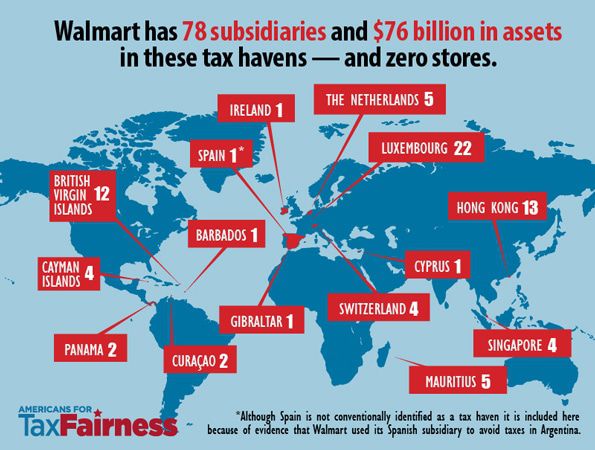
Tax evasion is on the rise year after year, costing the government millions of dollars in revenue that it cannot used towards the services mentioned above, harming the general public. In an IRS report for 2006, they concluded that over a third of the growth in the under-reporting gap is due to corporate income tax. If this practice is not heavily monitored and punished, consequences such as increased government debt, reduction of public goods, or higher taxes could occur. If taxes are increased, more evasion may occur, creating an extremely harmful economic consequences.
The price of smoking
In early
July, the French government has decided to raise the price of cigarettes to aim
10€ by next January.
The goal of this policy is to reduce consumption in order to improve public
health. According to a study done by the WHO,
even though some consumers – such as heavy smokers- are less sentitve to change in prices, the
demand for cigarette still decreases as prices increase.
Indeed, it
is now well known how cigarette smoke affects dramatically the active and
passive smokers by provoking all sorts of diseases among which lung cancer.
Therefore, it is easy to understand how cigarette smoke can be viewed as a
negative externality on public health. Consuming a cigarette has a higher
social marginal cost than private marginal cost because social cost includes
the expenses that society spend on medical care for those ill from breathing
cigarette smoke.

To solve
this market failure that would make everyone pay for the smoker’s bad behviour,
Pigou advises to internalize the externality, meaning that smokers will have to
pay for the difference between private and social cost in order to set Q* to QAE.
Another way to see it is that smokers aren’t able to judge the real cost of
buying cigarettes because they don’t take into account the long term effects
and therefore, the taxation raises the price of the good to its actual cost,
taking into account long term costs of smoking. It is interesting to see it
that way : when the price of the packet relfects the actual cost of
smoking a cigarette, teenagers will be less willing to start smoking.
Millennials Vote for Parks and Police
Data from the the U.S. Census Bureau recently revealed the top ten metros where Millennials are moving. Charlotte, Seattle, and Oakland hold the top three spots on the list. While many might think that these 20-34 year olds are attracted to cities with the most Instagram-worthy restaurants, economist Charles Tiebout would argue that they are smarter than that. In fact, he believes that individuals will move from one locality to another in order to maximize their personal utility. By essentially shopping around and voting for public goods, this migration will result in preference revelation and the optimum quantity of public goods.

While Tiebout's assumptions are fairly strict and unrealistic, it is interesting to observe them within the Millennial generation. If anyone were to be considered mobile, it's them. Millennials have this luxury because many are not yet settled down and they are highly valued in the job market. Given these characteristics, the possibility to move based on tastes for local public goods is a little more realistic. This past year, 86,641 Millennials moved to Seattle, one of the safest cities in the nation that also has an extremely high parkscore. From Tiebout's perspective, this would be 86,641 votes for a strong local police force and well maintained public parks. Additionally, 76,755 moved out, revealing that parks and police may not be the most valued public goods on those individuals' preference lists. Instead, maybe some moved to Oakland, one of the most accessible cities in the nation. That's one vote for public transportation. As Tiebout states, there is however an optimal size for all of these communities. Right now, it looks as if these top ten cities are aiming to reach that optimal size with high net migration. However, it will be interesting to see if and how these cities one day approach the other side of Tiebout's "optimal size" assumption: having to get rid of people.

While Tiebout's assumptions are fairly strict and unrealistic, it is interesting to observe them within the Millennial generation. If anyone were to be considered mobile, it's them. Millennials have this luxury because many are not yet settled down and they are highly valued in the job market. Given these characteristics, the possibility to move based on tastes for local public goods is a little more realistic. This past year, 86,641 Millennials moved to Seattle, one of the safest cities in the nation that also has an extremely high parkscore. From Tiebout's perspective, this would be 86,641 votes for a strong local police force and well maintained public parks. Additionally, 76,755 moved out, revealing that parks and police may not be the most valued public goods on those individuals' preference lists. Instead, maybe some moved to Oakland, one of the most accessible cities in the nation. That's one vote for public transportation. As Tiebout states, there is however an optimal size for all of these communities. Right now, it looks as if these top ten cities are aiming to reach that optimal size with high net migration. However, it will be interesting to see if and how these cities one day approach the other side of Tiebout's "optimal size" assumption: having to get rid of people.
If You Build It, Will They Pedal?
The Netherlands is well-known for its cycling culture. Whether commuting to work or simply running errands, the Dutch have stymied reliance on automobiles. Not only does cycling allow users to circumvent costly fuel expenditures, but it also yields various positive consumption externalities. As discussed in Gruber, a positive consumption externality entails some sort of external benefit imposed on third parties who are not at all engaged in consumption of the product. With regard to an increase in cycling's popularity throughout the Netherlands, positive consumption externalities entail minimized carbon emissions, reduced traffic congestion in cities and a reduction in the number of automobile-related accidents / fatalities.

Resulting differences between the PMB and SMB yield a situation in which Qae > Q*, indicating that more resources should be allocated toward encouragement of cycling. Utrecht, a small city in the center of Netherlands, recently spent $48MM to build 66,000 new, state-of-the-art bike parking spots for such purposes. Contention surrounds whether the municipal's efforts were sufficient, however. Despite being one of the most bike-friendly countries, the Dutch federal government was recently brought to court over air quality, which falls far below that called for by the European Union. This thus calls into question whether the Dutch government should be the one to spearhead such cycling initiatives or, if the externalities are capable of being internalized, the market would be better off left to its own devices. Furthermore, the project's cost was paid not just by municipal funds, but also by regional and national tax revenues. Reflecting a Samuelson approach, such federal interference inhibits individual preference revelations and, as a result, potential attainment of socially optimal outcomes.

Resulting differences between the PMB and SMB yield a situation in which Qae > Q*, indicating that more resources should be allocated toward encouragement of cycling. Utrecht, a small city in the center of Netherlands, recently spent $48MM to build 66,000 new, state-of-the-art bike parking spots for such purposes. Contention surrounds whether the municipal's efforts were sufficient, however. Despite being one of the most bike-friendly countries, the Dutch federal government was recently brought to court over air quality, which falls far below that called for by the European Union. This thus calls into question whether the Dutch government should be the one to spearhead such cycling initiatives or, if the externalities are capable of being internalized, the market would be better off left to its own devices. Furthermore, the project's cost was paid not just by municipal funds, but also by regional and national tax revenues. Reflecting a Samuelson approach, such federal interference inhibits individual preference revelations and, as a result, potential attainment of socially optimal outcomes.
Water, water everywhere...

Americans consume roughly 60
million disposable plastic water bottles every day, of which only about 10
million are recycled. Worldwide, plastic water bottle consumption is projected
to reach almost 1.5
billion bottles daily by 2021. It is common knowledge that plastic water
bottle consumption causes environmental harm, so why are people increasing
their rates of consumption? In America, where safe tap water is typically available,
the main reason for continued consumption is that consumers are not
internalizing the costs associated with the negative impacts of plastic pollution when
making their purchasing decision. When plastic bottles are thrown away, they
mostly end up being dumped in the ocean, where they release hazardous chemicals
that enter the marine food chain and contaminate fish and mammals often
consumed by humans. This contamination of the oceans and the marine food supply
represents a real cost imposed on fishermen, marine conservationists, and
seafood consumers that is not compensated by individuals who consume and throw
away their plastic bottles. As such, this case roughly represents a negative
consumption externality.
For this specific problem, government involvement is likely
the best course of action given the presence of assignment problems resulting
from the vast number and relative unanimity of individuals who consume and
throw away plastic bottles. A couple of localities in the U.S. have tried to
combat this over-consumption of plastic water bottles by imposing an additional sales tax to
consumers purchasing the bottles. While data are scarce, the available information
suggests that these taxes have been effective at reducing consumption. UCLA conducted
a study of a
plastic water bottle tax enacted in Washington state in 2010 and
found that water bottle consumption in taxed states drops by roughly 6.4%
compared to non-taxed states. While it is uncertain if this reduction moves
consumption to the exact socially
optimal amount, it does provide evidence that a tax on plastic water bottles
results in the desired outcome of a reduction in consumption, likely moving
consumption closer to the socially
optimal amount.
Separating Facts from Feelings Part 1
In 2016, Energy Transfer Partners was the center of scrutiny
from millions of Americans for the construction of the Dakota Access Pipelinewhich was designed to transport at least 470,000 barrels of crude oil a day toa port city in Illinois, particularly because of the pipeline’s proximity to
the Standing Rock Sioux Territory and Federal Lands. Energy Transfer Partners was the developer for
this project and had initially projected the pipeline to go underneath the
Missouri River near Bismarck, but due to statewide environmental concerns if aleak were to occur, the plan was altered such that the pipeline would runwithin a half mile up river of the Indian Territory. This pipeline was projected to increase
revenue for the region by 55 million dollars annually.

In short, a risk analysis was completed and determined that
the higher risk negative neighborhood effects of a malfunction with the
pipeline underneath the river near Bismarck would pollute the state capital’s
drinking water which outweighed the potential threat to a much more rural area
in southern North Dakota, which happens to be closer to the Indian reservation. The use of political channels sensationalized
this situation in the manner that millions were outraged because of the
“apathy” towards Native Americans and caused issues for the construction of the
pipeline via massive protests. When in
reality through the use of private bargaining between the ETP and the Native
Americans an agreement could have been reached such that the pipeline would be
built and the Native Americans wouldn’t be subject to a potentially negative
neighborhood effect without being properly compensated in some manner.
Subscribe to:
Posts (Atom)