Friday, November 20

From the Classroom to the Capitol: Teacher Unions


Teacher unions offer an interesting example of Olson's byproduct theory of interest groups: a group forms for some other reason than political action, and political activity becomes a byproduct rather than the primary objective. Teachers join their union for various economic and professional reasons such as representation in disputes, legal protection, job security, higher wages, better benefits, and improved working conditions. The large number of members, established leadership, affiliation with national organizations, and the dues teachers pay to get those benefits then fund and enable the organization's political work. Once established, teachers' unions can have tremendous political impact and can function as effective interest groups.

According to the North American Values Institute, a nonprofit watchdog that tracks ideological activism in education, the National Education Association (NEA), which represents roughly 3 million educators, spent at least $547 million on political activity and advocacy between the fiscal years 2016 and 2025. Defending Education, an advocacy nonprofit that also tracks union spending, reports a similar pattern across the two largest unions. Since August 2015, the NEA and the American Federation of Teachers have contributed over $669 million in member dues, fees, and PAC funds to political organizations, nonprofits, and campaigns. One recent example: in the first two quarters of 2026, the Protect Education, Accountability Now PAC received roughly $7.1 million from the Arizona Education Association and the NEA for an anti-school choice campaign. Although some of these political issues may overlap with the unions' interests in public education, their involvement demonstrates how political activity can become an important additional function of an organization whose members initially came together for other reasons. This example of teacher unions may also show how a byproduct can grow large enough to become a defining function, even as the organization still depends on the non-political benefits that keep its members paying dues.

Thursday, November 19

Artists vs. Labels


After reading the Kalt & Zupan paper, I have continued thinking about principal-agent problems and where I see them in everyday life. I listen to a lot of music, and I have often seen posts or headlines online about musicians having issues with their record labels. I decided to look at one of these disputes through a principal-agent problem lens. A famous example of an artist "outsmarting" his record label was the case of Frank Ocean. Currently Frank Ocean is a popular music artist, but starting out he did not get the recognition or compensation from his record label that he felt he deserved. Frank Ocean signed with a record label, Def Jam, after releasing a few hit singles early in his career. Somewhere along the lines his relationship with Def Jam soured, and he decided to trick his label.

Although the exact stipulations of his contract were not made public, it seems that his contract stated he had to release 2 albums with Def Jam, and he would only receive 14%-17% loyalties on these albums.  Frank Ocean released his first album, Channel Orange, in 2012, which was a big hit. A few years later, he released an album called Endless, which is a "visual album" that is not available on most streaming services. This album did technically fulfill his obligation to his record label, and only 24 hours later he dropped his "real" album, Blonde, through Apple Music. This album went on to be a smash hit. By tricking his label, he was able to make significantly more money by releasing Blonde with Apple Music on 70% loyalty terms, more than 50% greater than his contract with Def Jam. In this case Def Jam, the principal, was paying Frank Ocean, the agent, to drop albums which would bring them both money. However after signing a contract that he regretted, Frank Ocean acted contrary to the interest of the principal and dropped Blonde independent of Def Jam. There was some slack in the initial contract, as it did not specify that Frank Ocean could not release a "visual album."

Wednesday, November 18

The Pentagon’s Slack

https://upload.wikimedia.org/wikipedia/commons/d/d2/The_Pentagon_US_Department_of_Defense_building.jpg?utm_source=commons.wikimedia.org&utm_campaign=index&utm_content=original
DoD photo by Master Sgt. Ken Hammond, U.S. Air Force.

Niskanen's model asserts that bureaucrats maximize their respective budgets, and their ability to do so is unique because only the bureau knows its true costs. The Pentagon fits this well. Early this year it requested $1.5 trillion for FY27, yet it has failed every financial audit since 2018, so Congress has little ability to tell whether the last dollar is worth its cost. That gap represents its slack, and it persists because the Pentagon knows that anything unspent means a smaller budget next year. Less information for the sponsor means more autonomy for the bureau. 

Congress has only partly gone along. The House’s $1.15 trillion authorization matches the discretionary request, but its reconciliation package gave the Pentagon only about $60 billion of the roughly $350 billion it sought. Still, Niskanen treats the sponsor as a single buyer acting on the public's behalf, and Congress isn’t one. Members stand to gain jobs and contracts in their districts from a larger defense budget, but these jobs may not reflect the true output of the bureau's output (B(Q)). They have little reason to demand the audit that would shrink the slack. This weak oversight continues to last because it is politically convenient for the people who are supposed to provide it. 

Sunday, November 15

Home-made Logrolling

Let's assume Weingast and Marshall have accurately analyzed political group behavior. Weingast and Marshall claim that senate committees are made up of preference outliers. These preference outliers, by definition, have relatively uncommon preferences which mean they demand more for their area of legislation than a regular representative would. These preferences may be extreme, but it seems that, no matter which side of the political spectrum, the answer is to allocate more spending to their cause. Since politicians are vote maximizing, not necessarily GDP/utility maximizers, they would be inclined to spread costs to secure current wellbeing among their constituents and their constituents' priorities. I would contend that this is the case for most representative groups, that to overcome the opportunity cost of being a representative, you likely have strong preferences that demand a greater budget. 

In my house, at the beginning of the year we self-allocated ourselves onto a number of "committees" that oversaw maintaining a clean kitchen, foyer, front porch, or set up formals or watch-parties or scoured facebook marketplace for value couches, etc. I know this is a small sample, but from my experience, each committee wants to spend more of the house-budget on things pertaining to that committee: disposal (kitchen committee), bus (facebook marketplace committee), new christmas lights (porch committee), etc. To spend some of house budget money, a request must pass majority on a house vote. There was even some kitchen conversation about trading votes. This example to me seems eerily similar to Weingast and Marshall's example, and I know that these groups push for more spending for their causes.  

Perhaps this is one contributing factor to why our national debt is so high. It is worth thinking about.

The Economics of Student Leadership


Anyone who has served on the executive board of a student organization knows the frustration of doing the work you originally assigned to someone else. As the founder and president ("principle") of Women Entrepreneurship at UVA, I've experienced this firsthand. Much of my responsibility entails setting the organization's agenda and pursuing its long-term goals, which means bringing female founders and executives to grounds to speak with students. The role requires coordinating everything from initial outreach to event logistics, marketing, and finances. When I first started the organization, I quickly learned that in order to avoid burnout, I needed to recruit committee members, or "agents," to assist with our events.

While in theory, this delegation should have made my job easier, my goals for the organization did not always align with the incentives of the students I recruited to help achieve them. Once committee members had the title on their resume, their motivation to do the work faded. Committee members were saving themselves time and effort while continuing to enjoy the status benefits of their position titles. I also did not have a system in place to closely monitor or incentivize committee members, and because our constitution makes it difficult to remove underperforming committee members, there were relatively few consequences for acting in such a way. 
In other words, I experienced shirking in its finest UVA form. While l previously picked up the slack, this semester, I decided to address the underlying principle-agent problem the economical way.

First, I introduced a more competitive committee member recruitment process, placing greater emphasis on selecting students whose incentives appeared aligned with the organization's goals. Second, I assigned executive board members direct oversight of individual committees: our COO oversees logistics and outreach, our CMO oversees marketing, and our CFO oversees finance. This created another layer of accountability. I also developed detailed training guides to carefully define each committee's responsibilities and explain how to execute them. Finally, I introduced regular checkpoints throughout event-planning periods, requiring committee members to report progress and executive board members to provide updates on their teams. By implementing these changes, I’ve improved monitoring, lowered the costs of holding students accountable, and reduced the overall slack awarded to committee members, which have really paid off for the organization's success. 

Money Works, Justice Shirks

In their paper, Capture and Ideology in the Economic Theory of Politics, Kalt & Zupan address the presence of principal-agent problems in politics with an emphasis on ideological shirking. While it is an interesting perspective to look at issues present in the formation of policy and the selection of representatives, it's equally interesting to examine principal-agent problems on the judicial side as well; where people are held accountable for obeying legislation. 

Earlier this month, Mexican judge Luis Benítez Alcántara was arrested on U.S. charges of accepting a $2m bribe for ordering the release of Andrew Clark, a Canadian drug trafficker. This is a clear example of a principal-agent problem, where Judge Alcántara is the agent and the Mexican public, whose interests the judicial system is meant to uphold, is the principal. 

Unlike the U.S., the Mexican court system does not utilize a jury. With judges always having the final verdict on cases they are given a lot of slack, and imperfect monitoring of their discretion creates opportunities to shirk despite their obligation to uphold legislation. By allegedly accepting a bribe, Alcántara has engaged in an act of opportunism where he has not acted in accordance with the legislation set by his nation. He had a complete and utter disregard for the ethical and moral consequences that could follow the release of a drug trafficker. Although we may not be privvy to Alcántara's personal ideology, the charge of bribery suggests the monetary benefits likely outweighed the ideological considerations he holds in his utility function. This case highlights that public officials such as judges do not always act in the public interest and have the ability to exercise discretion for their own benefit at the expense of the principal. Unlike the legislation formation process where Kalt & Zupan juxtapose ideology with economic interests, this example is much more traditional in that the main variable in the agent's utility function is monetary incentive. The utility the alleged $2m provided is evidently much higher to Alcántara than the ethical/moral implications of his decision. Luckily, the U.S. has departments such as Homeland Security, whose monitoring and enforcement help to pick up some of the slack. 

Man of Rational Ignorance


This past weekend I watched one of my favorite movies: O Brother Where Art Thou. The movie follows three escaped prisoners in Depression-era Mississippi in search of a promised treasure, and models the plotlines of the Odyssey. One of the integral subplots covers the Mississippi governor's race between the incumbent Pappy O'Daniel and reform candidate Homer Stokes. During the climactic scene of the movie, the three prisoners (who have since formed a viral band) perform their hit song at Stokes' campaign gala. Stokes rashly begins to criticize the Soggy Bottom Boys and Pappy O'Daniel, being the public choice scholar he is, seizes the moment. 

See, Pappy O'Daniel remembered that it is irrational to vote, and so, voters are rationally ignorant. The room full of voters, who have little to no incentive to learn about candidates or issues, care a lot more about music (specifically "Man of Constant Sorrow") than they do political issues. Thus, when Pappy pardons the three on the spot and gives them positions in his "brain trust," this works perfectly to help him pull in more votes. All voters see is Pappy involving their favorite band (which is something that they place more value on). This is exactly what Johnson says politicians will do: offer slogans and endorsements that are vague and unrelated and play on the voters' ignorance. Stokes, on the other hand, does exactly what Johnson says not to do and takes a strong stance against something voters do care about, earning him a ride out of town on a rail. Thus, Pappy successfully employs his knowledge of rational ignorance to win back the hearts of Mississippians and likely the election. 

Grounded: Why Privatizing Air Traffic Control Never Takes Off

On Friday, November 13, the FAA ordered a stop on every departing flight in the US. At 3:54 pm, the stop was issued due to a major telecommunication outage. By the time the stop was lifted at 8:15 pm, roughly 12,000 flights were out of luck. Outages like this are exactly what supporters of air traffic control privatization cite when arguing for air traffic privatization. Lobbyist groups argue that the FAA shouldn’t both run and regulate the system. They want air traffic control spun off into a user-funded nonprofit. In 2017 an airline trade group, Airlines for America, funded a campaign called Citizens for On Time Flights to push for privatization. However, the campaign died, largely because aviation groups that are opposed to privatization were better lobbyists. For example, the Aircraft Owners and Pilots Association (AOPA), feared the impact of passenger fees on air travel access and worked to pass legislation in 2026 that prevented the use of funds to privatize the ATC system. 

Olson and Becker explain why privatization stalled, but they disagree about whether it will stay unsuccessful. Olson focuses on who can successfully organize. The benefits of a privatized system are spread across millions of airline passengers, so each person only benefits a little. That makes them a latent group with a clear free-rider problem. To “wake up” this group, lobbyists would need to offer selective incentives. Opposition groups, like the AOPA, are successful because of by-product theory: pilots join for its insurance, legal services plan and AOPA Pilot magazine, and its lobbying power comes along with the membership. Because power between the AOPA and privatization beneficiaries was distributed unevenly, but still the AOPA was able to affect policy, the case reflects Olson’s concern about democracy: organized groups can override unorganized majorities. 

Becker agrees organization matters but he treats policy as a competition in which each group’s influence matters only relative to its rivals’. For him, group size impacts both ways: larger groups bring more votes and resources but face worse free-riding and reduced pressure. AOPA gets the best of both, since its large membership increases its influence, while its selective benefits keep free-riding in check. Also, Becker adds a key constraint: as a policy’s deadweight costs rise, the people bearing them have more reason to push back. 

After November 13, Olson would predict little change, since privatization beneficiaries, the passengers, remain unorganized. Becker would say each outage raises the cost of the status quo and could eventually build a coalition strong enough to beat the AOPA.

Who are your tax dollars working for?

One of the last ads I remember seeing was this ad from one of Virginia's two senators, Mark Warner. What jumped out at me most was Warner "pushing to end no-bid contracts." A quick google search can show that the Trump administration has spent hundreds of billions on no-bid contracts. If Senator Warner and the other members of congress are able to pass legislation to this effect, that should be a huge win for the American consumer.

If government contracts are being awarded based off of the merit of what services/goods a firm can produce and the cost at which they will do so, then there should be less incentives for firms to rent seek. This immediately reduces inefficiency because firms no longer have an incentive to spend their resources (on something like hosting a politician at their private resort) in exchange for a rent that comes with a negative social cost (being awarded a lucrative contract even though another firm can do the same work at lower cost.)

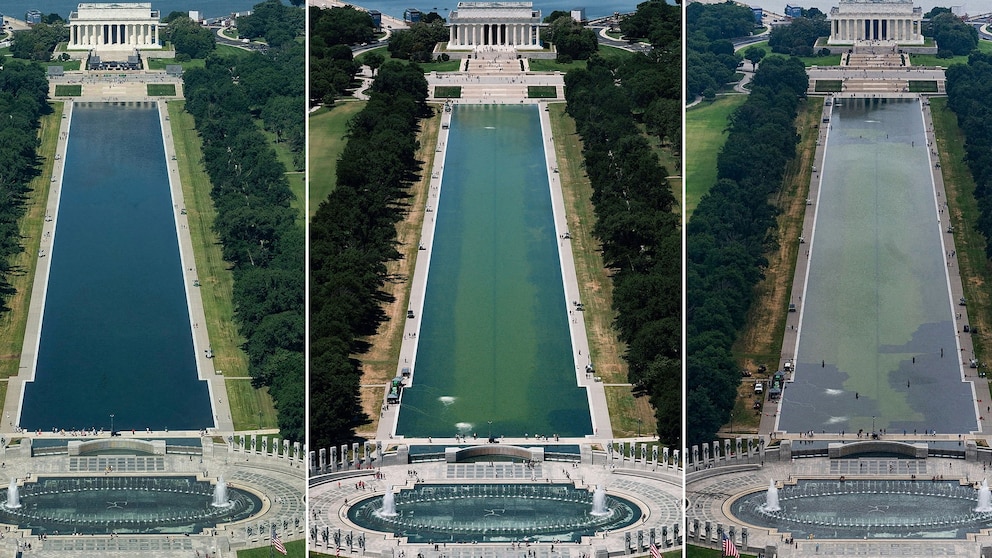
Reflecting Pool renovations to cost more than $16 million - ABC News

Suppose for a second though that currently there is no rent seeking, that the administration has already decided who it wants to give contracts to. Eliminating no-bid contracts would still benefit the American taxpayer because there is no competition to drive the price of the contract to a competitive level. A company given a no-contract bid earlier this year (to fix the reflecting pool) was given at 20% profit margin when the normal level is 10-12%. Maybe some legislation like this can be passed, helping the average American know that their tax dollars are going to worthwhile causes, or maybe the incentives will be too high and politicians will continue to grift.

Friday, November 13

Beefing with the Beef Industry


Through the late nineteenth century, local slaughterhouses supplied their own communities, but they faced growing competition from a handful of large Chicago-based packers, the so-called “Beef Trust.” The Chicago firms slaughtered cattle centrally and shipped dressed meat to markets across the country, using refrigeration and rail transport to sell at lower prices. Local slaughterhouses organized politically as the Butchers’ National Protective Association and accused the Chicago packers of selling unwholesome dressed meat. With that health concern as cover, they lobbied successfully for inspection rules that would burden the packers while sparing themselves.

The Meat Inspection Act of 1891 is a useful test case for Weingast and Marshall’s (1988) argument that legislators serve the politically responsive interests in their districts, and that concentrated, organized groups win because voters are rationally ignorant.

With the Meat Inspection Act of 1891, the costs fell on the Chicago firms, whose product crossed state lines, while local slaughterers, who sold only locally, avoided them. Local meat-packers and cattle growers who felt victimized by the packers’ growing power and by lower cattle prices pushed Congress to act, expanding the federal role. Gary Libecap states that “there was no evidence of a major health crisis regarding the consumption of beef at the time”.

Beef Trust packers practiced forward integration: they built refrigerated rail cars and branch houses to control distribution to butchers and bought out local meatpackers, while still buying cattle at auction in the stockyards. Later they pushed that network into other products such as poultry and eggs, and a 1919 Federal Trade Commission investigation led to their being forced out of non-meat lines.

The Freakonomics episode “Here’s Why Your Hamburger Just Got So Pricey” shows how the same industry looks today, and focuses on integration and market power within the beef industry. The podcast focuses on the current tensions in the beef industry and the growing presence of beef packers in the market. Today four packers (JBS, Tyson, National Beef, and Cargill) control roughly 85% of beef processing.

The first argument is that high beef prices stem mainly from a long biological supply cycle that corrects itself over time, and that the industry’s concentration and integration produce cost efficiencies that outweigh the modest market power they create, benefiting both ranchers and consumers. The second argument is that a handful of integrated packers hold too much leverage, a pattern with a long history of collusion and consolidation, and that structural limits, such as barring firms from multiple protein lines and from owning animals, are needed to restore competition.

The episode presents an interesting tension on whether the concentration in the beef industry is a source of efficiency or of unchecked market power.


Thursday, November 12

Jay Huff is an Agrarian (maybe)

On my occasional scroll through Substack today, I came across a post by Jay Huff about his visit to a bookstore and some new Wendell Berry books (our previously mentioned Agrarian.) I too think there's just something good about getting your hands in the dirt, and part of me does think that the good life for us all is one of acres of land, farm-grown food, and the daily rhythms of agriculture dictated by the sunlight. And that's an ideology: something that we think is best for everyone. Kalt&Zupan wrote that ideological statements are those that "are held as applicable to everyone, rather than merely to the actor making the statements." An ideology is not just an idea or way of life that you think is best for yourself, but that you think would also make everyone better off if they lived by it. 

Something that I found striking in the reading on ideology is that it can be "a convenient signaling mechanism when information on political decisions is otherwise costly" for candidates and representative, otherwise called an "impure ideology." Motivated by the desire to get reelected, reps use the mention of ideologies, presumably in their campaigns, to signal to voters what kind of ethical code or worldview they make their decisions by. Under a veil of uncertainty about what kinds of issues the candidate will be voting on, the voter makes up his decision according to what ideology the candidate affirms in the hope that the rep will vote based on his proclaimed ideology. The voter, because of the mention of ideology, will make a set of assumption about how the representative will behave.

The same signalling goes in everyday interactions too. The mention of Wendell Berry on Substack brings a certain set of assumptions to my mind about what kind of person I think Jay Huff is, based on my previous knowledge of Berry. In posting about the four Berry books he bought, it becomes a "signaling mechanism" to me of the kinds of things Huff believes about the world, based on the ideology of Wendell Berry. It is definitely not an airtight example of the kind of thing Kalt&Zupan are writing about. (Jay Huff is not clearly setting out his ideology in the same way that I think Kalt&Zupan would assume representatives do in order to procure votes, he's only implying it.) But I think it's interesting to recognize that the treatment of ideology as a signal happens everywhere. When I meet someone, it's far too costly to me to lay out everything about myself, but the way in which I interact, talk about my life, and maybe even the authors, books, or celebrities I choose to reference indicate something about my ideology of the world. When I am listening to someone else, I am picking up on these same things in order to make assumptions about their ideology. 

So through a two-sentence post about a bookstore visit, I have some knowledge (though incomplete) about the ideology of Jay Huff, and what he might think is best for everyone. It only took 10 seconds. 

Cleveland-Cliff's Push For Steel Tariffs


    Under the 2025 Section 232 steel tariffs, Cleveland-Cliffs, a major domestic American steel producer, exemplified Stigler’s argument that regulation is a good supplied to the groups that demand it most effectively. Protective tariffs act as a variant of entry control. The steel tariffs were originally 25% in March, but then they were increased to 50% in June. This increased protection from competition was not gained passively by Cleveland-Cliffs. Its CEO, Lourenco Goncalves, said the company expected the administration to implement, enforce, and increase tariffs if needed. When this expectation became reality, the company publicly applauded the decision and he claimed he “influenced that 50 percent”. This illustrates the demand side of Stigler’s model. Stigler argues that in a concentrated industry with a large stake in the outcome, the industry actively seeks the state’s coercive power. In return, the administration stood to maintain and gain support in steel-producing states.

     However, what is the cost of this regulation and who does it fall on? The Can Manufacturers Institute opposed the 50% tariff rate because domestic steel production could not meet US demand. This meant can makers had to keep importing and therefore pay the tariff. Can producers said the new tariff rate raised production costs by 14%. This increase in costs was passed down to households and commercial businesses. Since the tariff also eliminates some trade completely, consumers lose more than producers gain. This articulates Stigler’s claim that the industry’s gain from state regulation is less than the damage to the rest of the community.

Wednesday, November 11

NBAgents


After reading the Kalt & Zupan article and discussing the principal-agent problem

this week in class, I started thinking about where I have seen this problem occur.

My mind went to the NBA, where there is a long history of players (agents) acting

in ways that are counteractive to the league’s interests and the interests of their own

team (principals). In the past few years there has been lots of discourse about load

management, which is when players decide to sit out of games (or shirk) under the

pretense of “preventing future injuries” or “worsening current injuries.” Players sign

lucrative contracts before the season which do not depend on the number of games

played, so if they would rather take a game off to rest on the second night of a

back-to-back, for example, they have little reason not to do so. However, team owners

and the league as a whole would much rather have players play in as many games

as possible, as this increases the number of television viewers and ticket sales.

In 2023, NBA Commissioner Adam Silver passed a "65 game minimum rule",

which required players to play at least 65 regular season games to be considered for

any regular season awards, such as all NBA teams, defensive player of the year, and

the MVP. These awards are very important to players, as winning an award can have

contract implications. Additionally, winning an award like the MVP plays a big role

in fan discourse, and most players would like to have such an award attached to their

name. However, this rule did not come without backlash, as some feel the 65 game

threshold is too high or may encourage players to play through real injuries when

they really should be resting. This rule has critics and supporters, and I think it has

been an effective incentive for star players to play more games.


Tuesday, November 10

No Surprise to Stigler: AI Companies and Regulatory Capture


    Stigler claimed in his seminal paper on regulatory capture: "As a rule, regulation is acquired by the industry and is designed and operated primarily for its benefit." There is likely no industry under greater scrutiny and threat of regulation right now than the artificial intelligence (AI) industry. As Stigler would predict, it's not just altruistic politicians and concerned members of the public advocating for regulation. Massive AI companies like Anthropic and OpenAI are racing to give their input and shape policy. Currently, Anthropic is pitching a draft AI safety bill to lawmakers that allows the government to block an AI company from releasing a new model under a strict set of circumstances where either clear, potential damages total over $1 billion or more than 50 people stand to be seriously injured or killed. That is not a very stringent safety standard to apply to a revolutionary technology. If anything, it serves to protect Anthropic from restriction by the government by setting a higher bar for what qualifies for restriction than what a legislature purely concerned for public safety might set. After the disruptive experience of having the access to Claude Fable 5 and Mythos 5 restricted by the federal government, it is easy to see why Anthropic would push for something like this to be written into law.

    That said, I can't bring up Anthropic without mentioning the company's origin and goals. It was founded by members of OpenAI who left over safety concerns and have since poured millions of dollars into industry-leading safety research. The founders' safety concerns seem sincere; it is hard for me to believe that a group would leave one company to form another in the same industry with new safety ideals just to allow them to more easily push for beneficial regulation. Still, their positioning as the safety-concerned firm certainly brings great benefit in their ability to influence AI regulation by acting or posing as a safety expert with altruistic motives. I'd be interested in learning whether this is a pattern repeated across industry. Are companies that have Environmental, Social, and Governance (ESG) goals more successful in obtaining beneficial regulation?

Monday, November 9

High Hopes and Narrow Zoning in Fluvanna

Fluvanna.jpg
Illustration by Cvillepedia

    Stigler argued in "The Theory of Economic Regulation" that regulation is “acquired by the industry and is designed and operated primarily for its benefit,” and that the most valuable favor an industry can get from the state is control over entry by new rivals. Over in Fluvanna, they're currently drafting marijuana zoning rules that look just like that kind of tool. Retail stores can only locate in B-1, B-C, or I-1 districts, and each one needs a special use permit. Stigler compares this kind of barrier to a “certificate of convenience and necessity.” With the limited number of sites, permit costs, delays, and risk of denial, the zoning rules raise the cost of entry and allow sellers who are already approved earn more than a competitive return. Two groups stand to gain here: the first licensed sellers, and the owners of land in the few eligible districts, whose parcels likely become more valuable because of the zoning-induced scarcity. The costs will then fall on consumers, who will face higher prices and fewer stores, and on would-be entrants. 

    Stigler 71 also noted that regulation is never purely industry-written. The political process “automatically admits powerful outsiders." Through a public hearing, Fluvanna is giving residents an opportunity to voice concerns and provide feedback, which ensures the final rule reflects other voices. And, just like the residents, the County has its stake: a 3.5% local sales tax. The oil example in Stigler showed that limiting entry creates "profits of exclusion," and that politics decides who keeps them. Fluvanna's zoning limits are creating that scarcity, and the 3.5% tax allows the county to have their share. Stigler's logic would predict that sellers would accept the tax while supporting the permitting rules.

Sunday, November 8

Regulation by Popular Demand


This year, the governor of New York signed a moratorium pausing the expansion of data center development in the state. This responds to the enormous backlash following the rapid expansion of data centers scattered across the state. Understandably, there is a strong sentiment against AI and large language models taking people's jobs and data centers destroying the environment and raising utility prices. The response to this is a push for regulation against further development of data centers, which aims to halt the significant increase in utility prices in their general area. Importantly, the regulation freezes new applications for data center development, not halting current projects, which directly stifles capacity for new entrants. 

According to Stigler 71, this regulation should be welcomed by the large data center companies that dominate the market share, because it stabilizes their respective ownership by increasing entry barriers to develop a competitive product. In this case, voters brought regulation against the data center companies, but the companies should, in theory, benefit more this way than under perfect competition. The moratorium effectively pauses new data center construction for one year, and opens the door for further regulation in NY and other states. Since this regulation lasts only a year, it does not necessarily secure the future of dominant data center firms, but should New Yorkers be happy to have handed their big enemy a head start?

Leaf It to the Lobbyists


In the language of public choice, the American environmental movement before the 1960s was a textbook latent, sleeping giant (T = 0). Millions of citizens loved the outdoors or worried about the smog and polluted rivers near their homes, but for any one person the cost of organizing a nationwide political effort far outweighed the small personal benefit of cleaner air or water. Clean air is a classic collective good, so everyone gets the benefit whether or not they contribute, and the rational response is to free ride. The result was a huge but politically silent constituency. No cohesive national entity turned that diffuse anxiety into federal law, so the transfer of wealth (T) the group could win through the political process was zero.

Two shocks woke the giant. Rachel Carson’s Silent Spring (1962) gave the public a vivid account of what pesticides were doing to ecosystems, and the 1969 Santa Barbara oil spill made the threat visible and local. Together they sharply raised the perceived personal benefit of action, which was enough to tip the cost-benefit calculation for many people. The anxiety peaked at the first Earth Day in 1970, when an estimated 20 million Americans took part. Existing organizations like the Sierra Club saw membership surge, and new institutional interest groups, the Natural Resources Defense Council (NRDC) and the Environmental Defense Fund (EDF), were founded. These groups were small, professionalized, and funded by committed benefactors who valued the cause enough to shoulder most of the costs. In Olson’s terms, this is the move to a privileged group (0 < T ≤ T): a small, organized core whose members each benefit enough that they will pay to lobby, whether or not others contribute.

Once organized, the groups could extract real political gains, and T became greater than zero. The clearest example is the Clean Air Act of 1970, which was backed by the newly organized lobbies and administered by the new EPA. It forced automakers to cut tailpipe emissions dramatically within a few years, shifting wealth from polluting industries and, indirectly, their customers toward the people who value cleaner air, including the group’s members and donors. The Clean Water Act followed the same pattern, imposing compliance costs on dischargers for the benefit of those who prize clean waterways. The public choice lesson is that the underlying preference for a cleaner environment existed all along. What changed was that a few committed benefactors solved the organizing problem, which turned widespread but silent concern into concentrated political power.

Midterms: The President Goes Down(s)


        While doing some research out of curiosity on how the midterm results differed from historic results, I came across an article noting that, since 1946, 90% of midterm elections result in the president’s party losing House seats. While there are plenty of formal explanations, it occurred to me that two ideas from our Downs reading could offer complementary ones. 

1) Voters are rationally ignorant. This means that studying every policy costs more than one vote is worth, so voters rely on shortcuts, one of the easiest being judging the party in power on visible results (prices, jobs, headlines, etc.). The opposition can stay ambiguous, but the incumbent has nowhere to hide. 2) Parties formulate policies to win elections, not the reverse. Downs’ parties are vote maximizers, so they blur their platforms to earn votes from as many heterogeneous individuals as possible. This may work while a party is campaigning, but once in power, it has to pick specific policies, and every choice disappoints the groups that the vague platform had once attracted. 

While these are not a replacement for standard explanations for midterm results, Downs’ ideas can serve as a complement to them. When put together, they suggest that the strategy that wins a presidency, ambiguity, becomes a liability once a party has to govern, and rationally ignorant voters then hold the visible incumbent responsible.


Counter-Mobilization and The Rational Voter Hypothesis


The 2026 midterms delivered both a massive ‘blue wave’ and the second-highest midterm turnout since 1914, with 49% of eligible voters casting their ballots. I was initially confused when considering high turnout through the lens of the rational voter hypothesis, where a person only votes when pB > C. Even in the closest race I followed this cycle, Mississippi’s Senate contest, where the margin briefly shrank to a few dozen votes out of around one million cast, voters’ p was still low and no single ballot was decisive. Why, then, did so many people vote, and why did the increase in turnout allow Democrats to make such great gains? Though p was low for all voters, perceived B split sharply along party lines.


Before the election, President Trump told voters to act like he was on the ballot. As many Americans expressed frustration with affordability and the Iran war, Democrats likely saw a high cost to keeping Trump-endorsed candidates in office, raising the benefit of replacing them. Many Republicans may have faced the opposite situation, disagreeing with Trump’s recent policy decisions and hurting from high prices while ideologically differing from Democratic candidates. With neither option appealing to some Republican voters, they saw little benefit in either candidate winning, so pB < C and abstaining was rational. Compared to the 2024 presidential election, the Texas governor’s race shows the partisan turnout gap: Republican Greg Abbott received ~30% fewer votes than Trump did in 2024, while Democrat Gina Hinojosa received ~8% more than Harris. 


Making the midterms about Trump raised Democrats’ propensity to vote and lowered Republicans’ desire to vote, consistent with the rational voter hypothesis. This resulted in historic Democratic gains in deep red strongholds, as Democrats’ perceived benefit from rebuking Trump rose while Republicans’ support for the sitting President and his associates waned. With eyes now on the 2028 Presidential election, it will be interesting to see if Trump has the same counter-mobilizing effect on Republican voters if he has a hand in choosing the Republican nominee.


Politics without Politicians?


American democracy operates by having citizens elect officials to vote on issues on their behalf. This works well in theory because it delegates policy decisions to knowledgable, intelligent individuals who can dedicate time to learn about the issues. However, some argue that those who run for office are not representative of the population, since they must be wealthy enough to afford to run for office and are often hungry for power. In a Freakonomics podcast, politician Terry Bouricius and professor Hélène Landemore argue for election by sortition, once used by the Ancient Greeks, as a way to produce fairer results. Sortition is the random selection of a small group from a population to vote on a issue. Bouricius argues that under democratic voting, voters have no incentive to learn about the issues because they know their vote will not be decisive (indirectly referencing Johnson's rational ignorance and rational abstention theory). Under sortition, however, each individual's vote has a much larger chance of being decisive, and the government would pay them to inform themselves and have long debates about the issues.

The host shared anecdote about being selected for jury duty and being amazed that, even in a relatively minor drug case, all twelve jurors had a thoughtful, nuanced discussion to reach an informed decision. He then wondered if applying this method to politics would more accurately reflect the preference of the population rather than the interests of large lobbyists. Bouricius and Landemore argue that sortition should be used for divisive, high-stakes issues such as healthcare, abortion, and taxation because each individual's vote would have a larger direct effect on the outcome and politicians would not have to face the backlash of an unpopular decision. 

The podcast never mentions the level of majority required in sortition, which represents a large potential flaw in this new decision-making system. Jury duty requires unanimity because of the high external cost of the decision to convict someone of a crime. If a sortition of 1,000 people (which is the example size they references) had to reach unanimity, decision-making costs would be infinitely high and a decision would never be reached. Voting systems requiring less than unanimity eases some of the decision-making costs but impose high external costs on other groups, some of who may not even be represented in the sortition. Sortition with a majority where external costs and decision-making costs are minimized could be an interesting alternative, since unanimity with this large of a group is unattainable. But there are still many flaws besides the decision rule -- the given individuals may not take voting seriously, may still be uninformed or very biased, and could still be coerced -- which is why sortition can work for small panels on local issues but should not be applies to national politics.