Friday, September 22

The Supreme Court of Kenya Nullfies August Election


This week, Kenya’s Supreme Court released its full ruling nullifying the results of the presidential election that occurred on August 8th. This year’s election, between incumbent Uhuru Kenyatta and rival Raila Odinga was expected to be one of the closest elections ever, with some predicting Raila winning narrowly. On August 11th, the Independent Electoral and Boundaries Commission (IEBC) declared Uhuru the winner by about 10%, but before a quarter of paper forms were collected. The IEBC refused a court order to open its computer servers. Raila contested the results in the Supreme Court and on September 1st the Court nullified the election results. A new presidential election is set for October 17th. At least 24 people have died in violence following the election. In 2007, over 1,000 people died and over 600,000 were displaced during violence following that year’s election.

How does such uncertainty and risk affect the calculus of a rational voter? Kenya uses a mixed electoral system – a presidential candidate must win 50% of the overall vote and 25% of the vote in at least 24 counties. This increases the probability that an individual’s vote would affect the outcome (though admittedly negligibly). However, voter turnout in Kenya is high: 80% in 2017 and a record 86% in 2013. Voting is not mandatory. On one hand, not a single vote counts in a rigged election. On the other hand, voters may derive more expressive utility from voting as an act of resisting corruption. The expectation that electoral results are legitimate, whether one’s personal vote counts or not, is a part of the marginal analysis that U.S. voters may take for granted. (Or at least until recently)

Thursday, September 21

What's up with millennials?

According to a new study, 50% of 18-34-year-olds said they would forfeit their right to vote in the next two presidential elections in return for never having to pay another student loan payment again. I found it staggering that so many millennials place that much value on their vote. The probability that an individual's vote will force or break a tie in a presidential election is so incredibly tiny that his or her vote is essentially meaningless. What could possibly explain such behavior?

We know that E[MB]=P*|V1-V2| +D, and that this has to be greater than the marginal costs in order for the voter to decide to vote. Without the D in that equation, the expected marginal benefit of voting is virtually 0 since P is infinitesimal. Given that 66% of graduates from public colleges had taken out loans in 2012, with loan debts averaging $25,550, the amount for D must be astronomical in order for millennials to value their expected marginal benefits higher than the marginal costs (and subsequently choose to vote).  They must place thousands of dollars of value on responding to social pressure to vote, deriving utility from the act of voting, fulfilling a moral obligation to vote, or the act of expressive voting. Typically, the only marginal costs of voting include time wasted getting to the polls, standing in line, forgone paychecks,  etc. But here, the marginal costs include all that, plus thousands of dollars of debt! I would love a follow-up study to determine which of the above reasons is most commonly cited as the reason for this behavior.

"Un voto, dos votos, Español el que no vote"

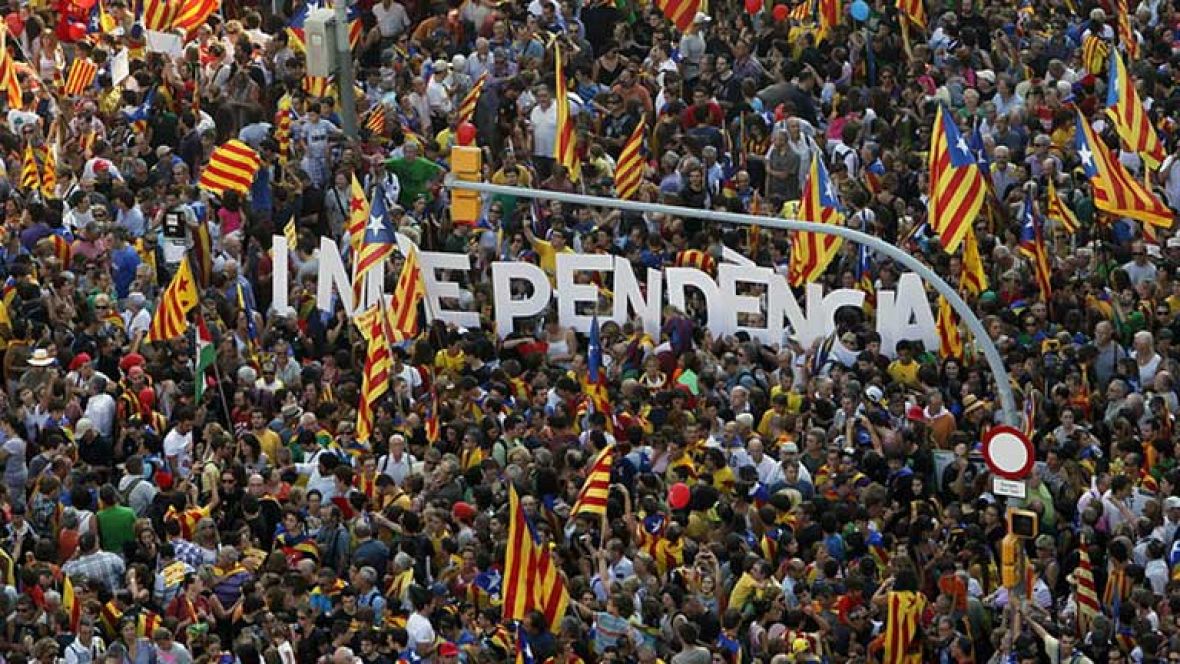
Someone told me this summer that the only similarity among the different provinces in Spain is that they all want to be independent. It was not until 2011 that Eta, a violent separatist group in the Basque country, decided to abandon the armed activity that had begun in the 1960’s. Today, about 16-25% of Basques still favor independence but the independence movement that is currently grabbing headlines worldwide is Catalonia. On October 1st, Catalans will head over to the polls and vote on the referendum that will determine whether to remain part of Spain or not.


In the past few days, Catalonian officials have received pressure from the Spanish PM and other high-ranking officials delegitimizing the election. This morning, the Spanish government has attempted to suppress voter turnout by increasing the marginal cost of voting through imposing fees on those who take part of the referendum. On the other side, massive rallies have taken over the streets with protesters chanting, “One vote, two votes, Spanish hewho doesn’t vote”, encouraging people to show up at the polls in ten days. According to the newspaper El Pais, only 31% of Catalonians support independence, making the likelihood of independence very unlikely; however, it would not be the first upset victory for independence. What is certain is that as irrational as voting may seem, voter turnout will be a critical determinant on the final outcome. 

Wednesday, September 20

Voting turnouts in Greece

The collapse of the financial and stock markets in the US back in 2008 had significant effects on other nations' economies all around the world. One of the countries that still suffers these devastating consequences  is Greece. The country's problems of unemployment, inflation and inability to stabilize dept have been discussed thoroughly during the last 8 years. One would except that living during really difficult times would act as a motif for people to take action and turn into "citizens" who exercise the rights provided by democracy. Yet, during the last couple of years, specifically in the period from 1985 to 2015, the voting turnout has been decreasing significantly with no signs of increasing. On the September 2015 elections, voter turnout reached all-time low with various sources estimating it close to 56% .


What could be a sufficient explanation to that dramatic decrease ? From as early as the 70s to 2014, Greece has had a two-party system. Hence, the people's benefit from the difference in the utilities coming from the victory of either party |V1-V2| has been decreased ,since the people have become almost indifferent to either of the two parties, reinforced by the fixed (extremely low) chance of affecting the result. The minimax-regret strategy might also be able to give a sufficient explanation if we consider the opportunity cost in the case of the unfavorable party winning. Since the two parties have been favoring their own supporters during their time as the government, the overall cost Ct incurred by voting in the state of world where the outcome is independent of the individual's vote (SI) includes both the cost of the going-to-vote process plus the cost of "unfavorable" policies brought by the "unfavorable" new government. In other words, the cost of voting Ct for a Greek person is much higher than other Ct in different countries. Therefore, Ct can be quite large and force the maximization of regret to occur after following the "vote" strategy leading to a minimax-regret strategy to abstain. Greece will see change (towards the better or worse) only when a political leader will manage to reverse this effect and convince the people of his honesty and passion for change.

Sunday, September 17

Government provision of public goods as indirect wealth redistribution

The beauty of voluntary private transactions is that each individual may choose how much they wish to purchase of each good, abstaining from those they do not value and indulging in those they do. Public goods thus pose a problem. Government intervention is often required in order to achieve the allocatively efficient quantity and this government intervention frequently fails to take into account the relative preferences of individual members of society, instead distributing the cost of the good either uniformly or in accordance with some trait other than demand for the good (e.g., property value, income). Allocative efficiency is a question entirely separate from distributive justice. The solution chosen to achieve Q(ae) requires a judgement of distributive justice, irrelevant to the efficient allocation of resources, but deeply relevant to the individuals affected by the resulting transfer of wealth. 

Funding through a proportional (i.e., neither regressive nor progressive) income tax means that wealthier group members will pay for a greater portion of the public good than will their less wealthy counterparts. Similarly for proportional property taxes. These taxes, among the most common ways to fund public goods, involve a certain degree of inherent redistribution. Whether this is good or bad depends entirely on the very controversial proposition of whether redistributive taxation is good or bad. For the libertarian who views all redistributive tax as theft, this may lead to a condemnation of even taxation not specifically intended to redistribute wealth, due to its redistributive effect. For one passionate about the justice of redistribution, this may mean that should pursue this redistribution through the provision of public goods, rather than directly, as taxation for the provision of public goods will be less strongly opposed than taxes aimed explicitly and solely at redistribution. Most importantly, when making decisions about public goods, one must remember that provision of public goods, while not redistributive by name, cannot be made entirely non-redistributive. Thus, ideological questions of desert and entitlement must be answered, in addition to the positive question of optimal allocation. 

"Young Invincibles"

The private health insurance exchange is an exchange run by a private sector company that focuses on cost reduction for the health care system, and offers a series of standardized health care plans that lower the cost of acquiring health care insurance. However, the ACA exchange rates are driving up higher and next year experts predict that they will rise by double digits. This is a result of ADVERSE SELECTION. The Affordable Care Act, passed in 2010, made medical underwriting illegal — essentially allowing anyone (even those with pre-existing medical conditions) to buy insurance coverage on the exchanges. As a result, one side of the market has more uncertainty than the other—in this case, the insurers. In the insurance business, it is important to make sure that sick people don’t take over the market and drive up premiums and drive off healthy people from joining. However, due to the ACA, there is an imbalance of information and insurers are not able to combat these issues by using an individual’s health background when deciding whether to offer coverage and how much to charge them.

Those with the most need for insurance chose plans with higher monthly premiums to use more services, while the healthier people bought plans with lower premiums. The mix of the two groups is essential to moderating premiums, and as we learned the bigger the pool is, the more risk is diversified. However, many healthy customers are avoiding the subsidized markets, being coined as “young invincibles.” The ACA set limits on what insurers could charge older people purchasing policies because the price would be pushed too high due to the biased pool, and adverse selection is leading to market failure; UnitedHealth reported losing $1 billion on its ACA plans and many other insurers are struggling to manage their high-cost exchange population. Insurers and policymakers are now deciding what needs be done to reach a demographic where there is a proper mix of the market pool, leading to stable premiums.